
Last updated September 20, 2026
Free on-site gate assessment - hinges, posts, and your LiftMaster or Nice gate operator checked before anything is quoted
The assessment is free and the quote is the invoice.
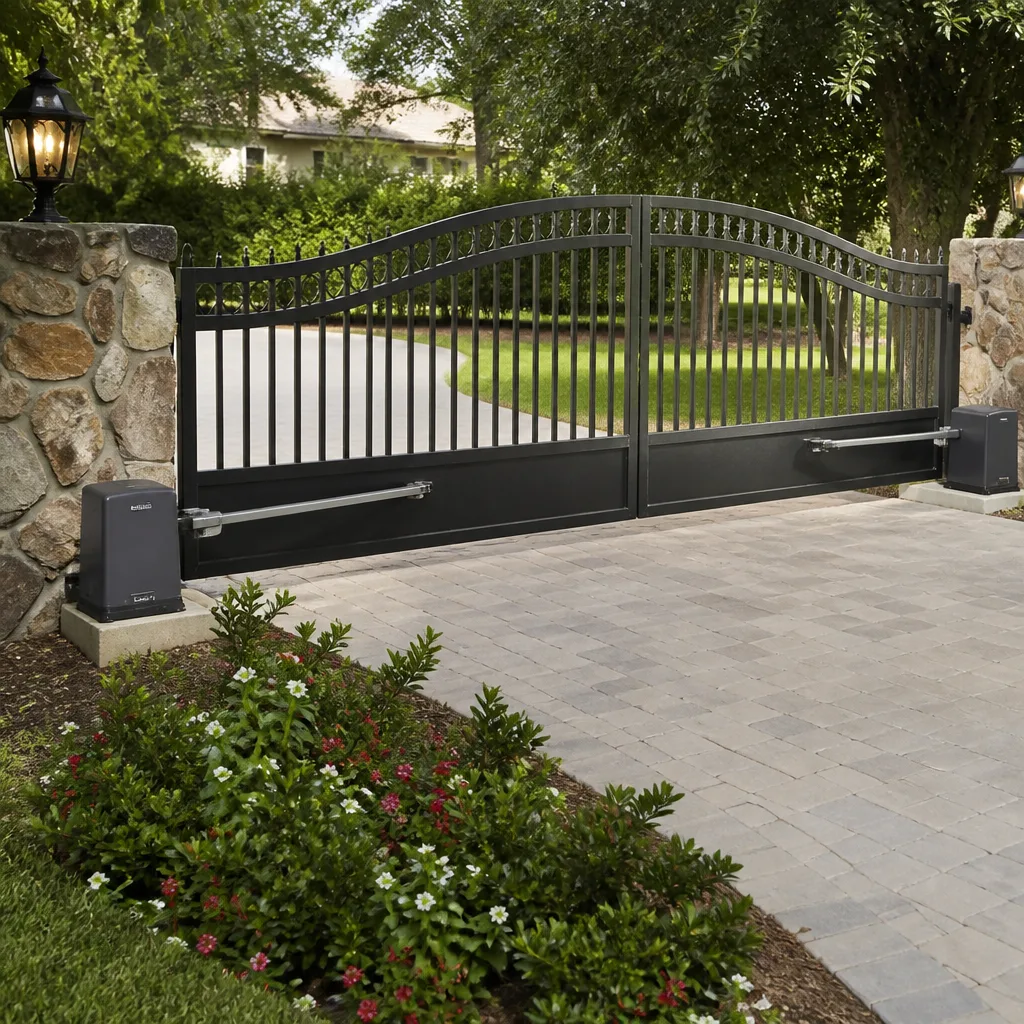
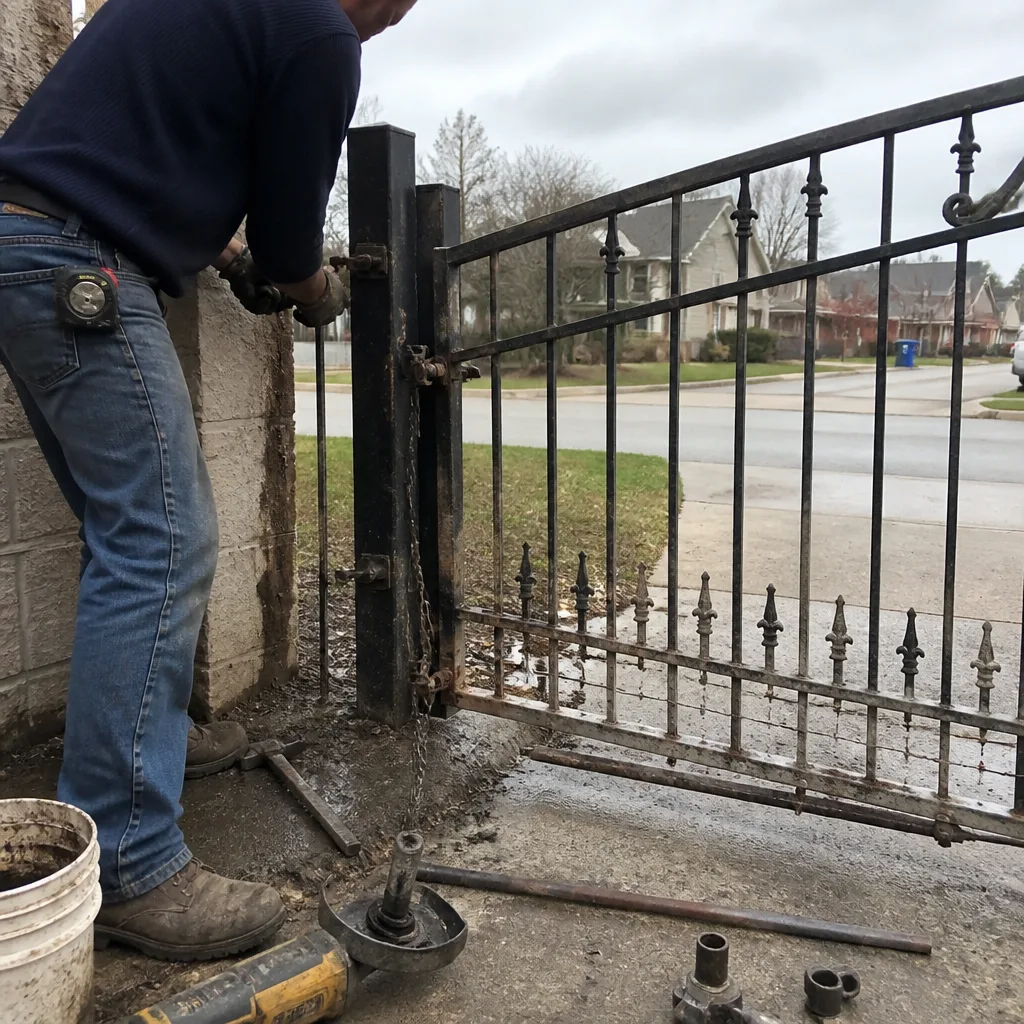 Before
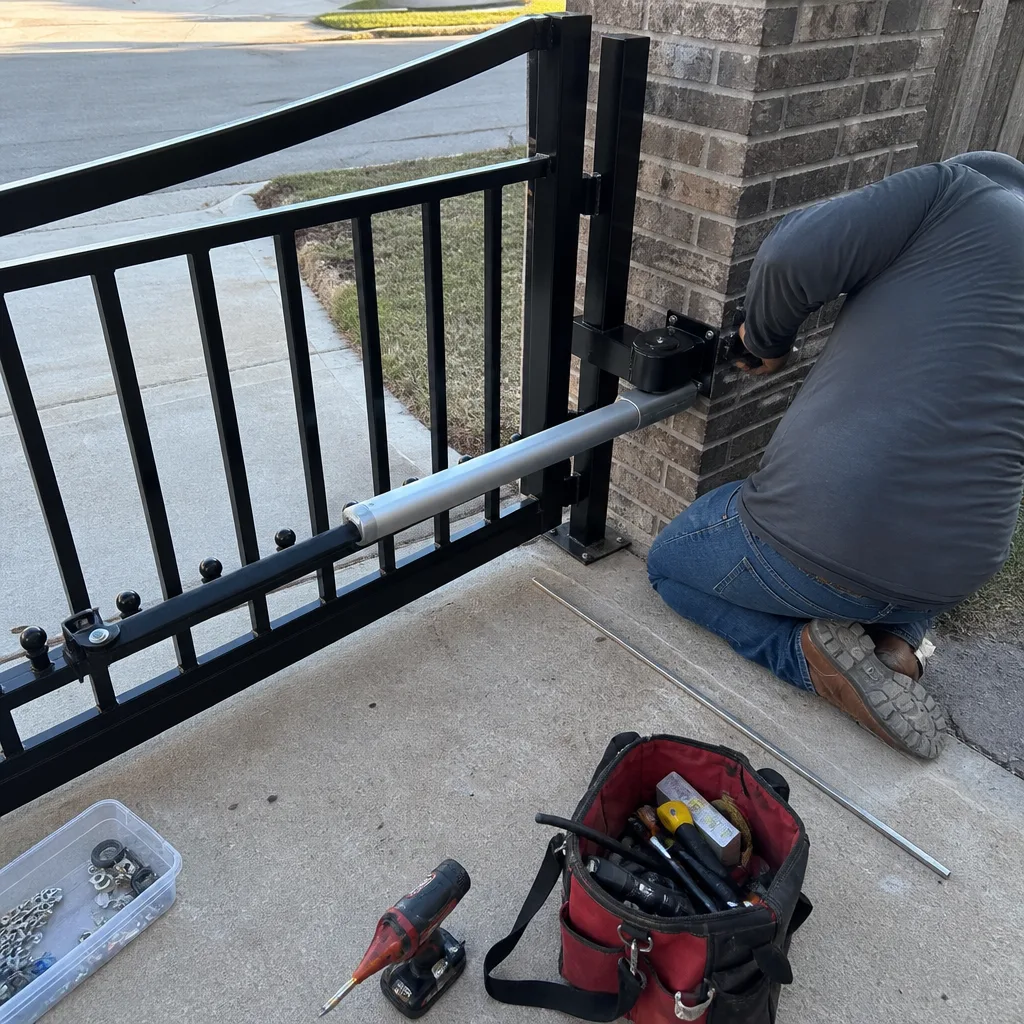 After
After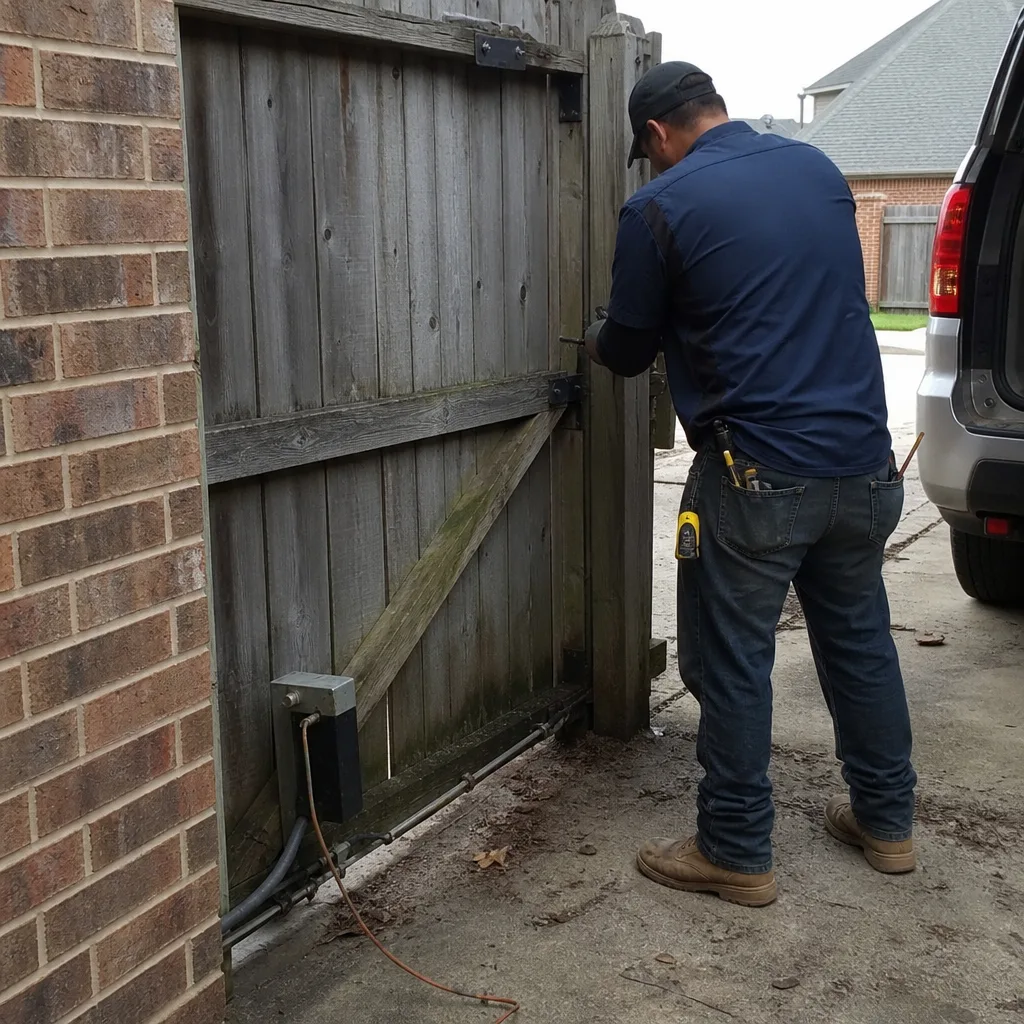 Before
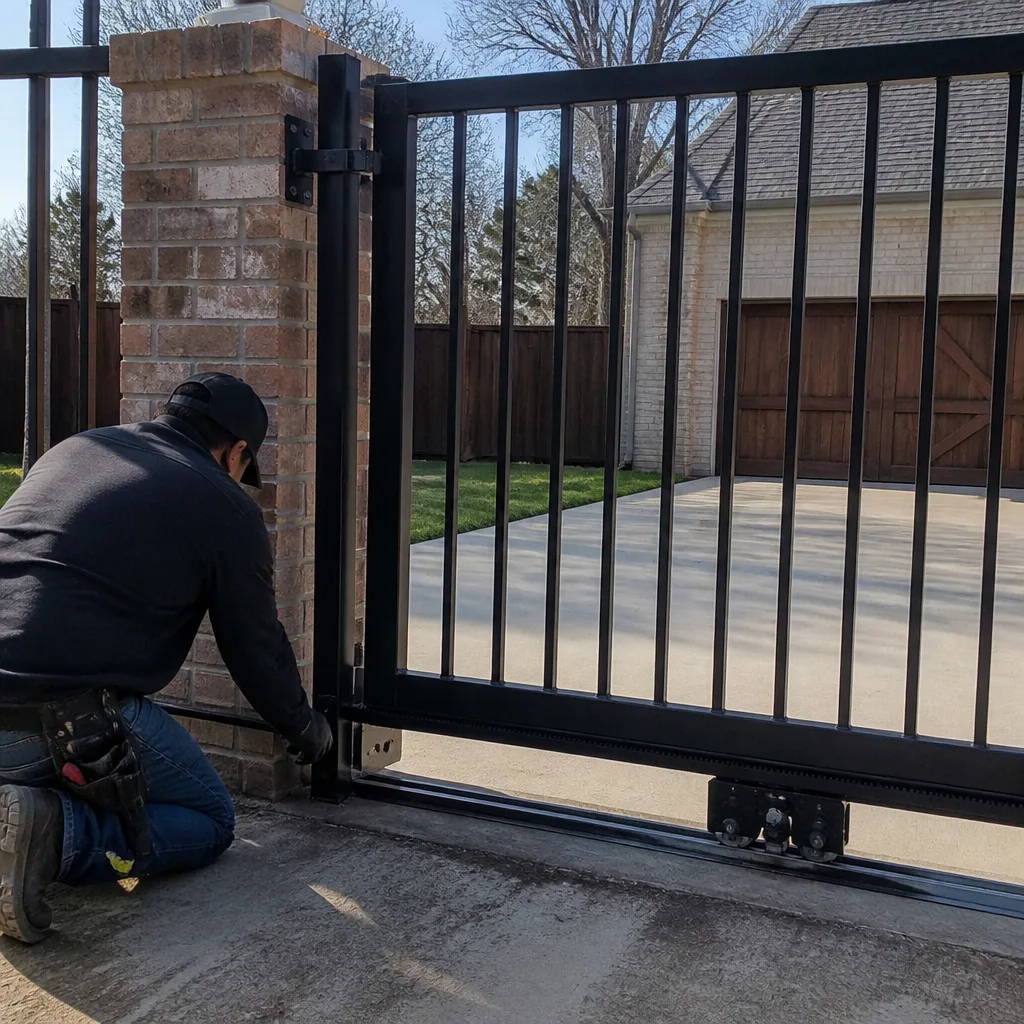 After
After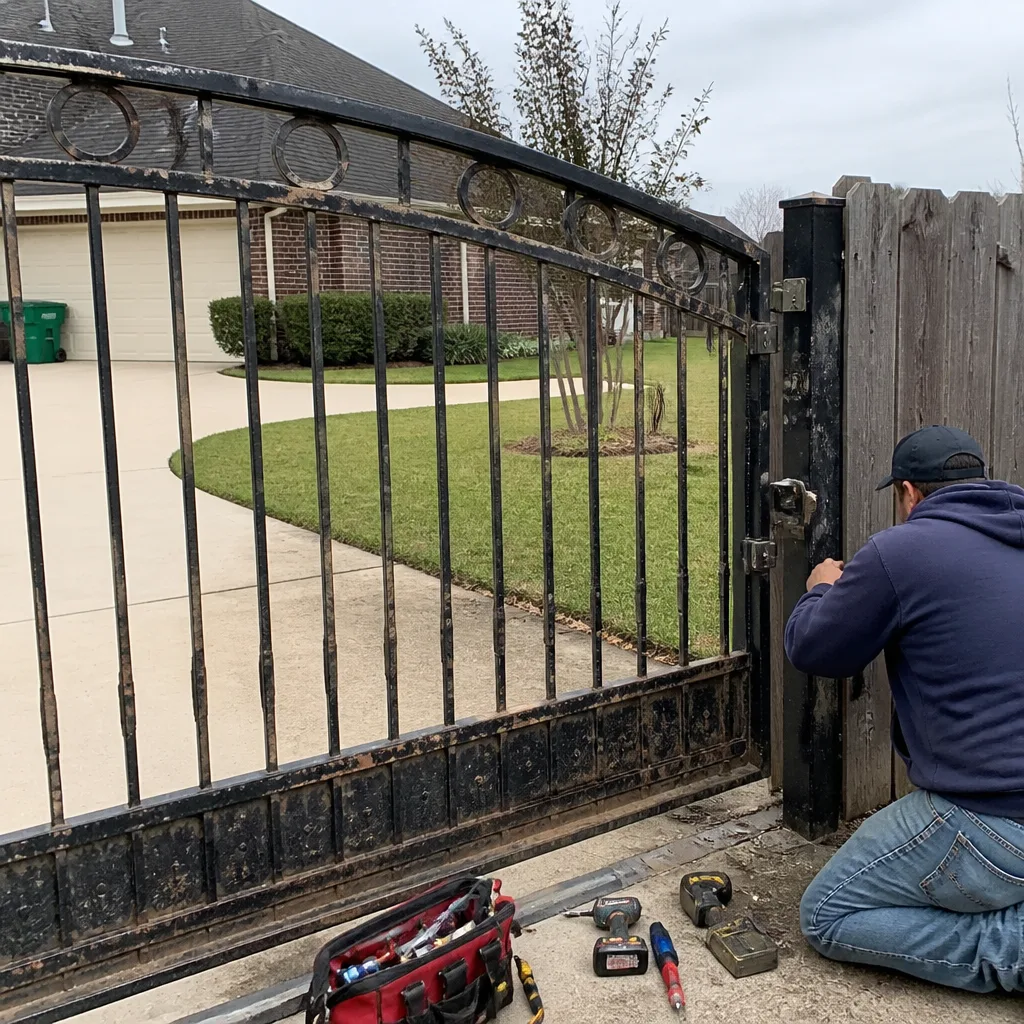 Before
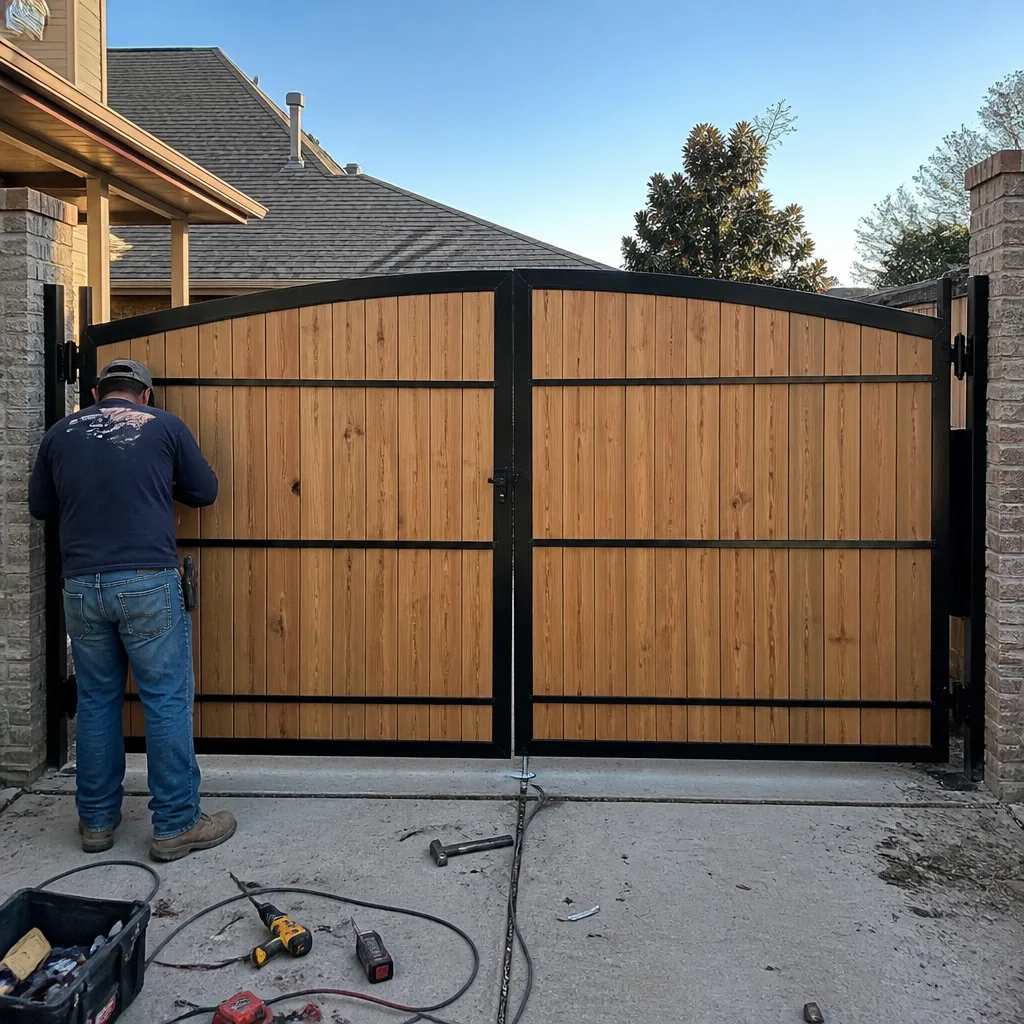 After
AfterGate Repair Permits, Codes & Inspections in TX: What You Need to Know
Installing a new operator on an existing gate in Pearland typically requires no permit, but replacing the post it’s attached to might. That distinction surprises almost every homeowner who’s done it. The line isn’t the dollar amount of the job and it isn’t whether a contractor does the work. Texas gate work splits into three categories: maintenance, replacement-in-kind, and modification. Only one of those reliably triggers a permit in Pearland, and this guide shows you exactly where that line sits, what UL 325 requires of automatic operators, what an inspector will actually look at, and how to verify the work done on your property was legal.
Quick Answer
Most gate repairs in Pearland, Texas require no permit because they’re classified as maintenance or replacement-in-kind under the International Residential Code, as locally amended. A permit is generally required only when the work involves structural changes such as new footings, relocating posts, adding a masonry column, or running new underground electrical conduit. Automatic gate operators must meet UL 325 safety requirements regardless of permit status, and you should always verify that a contractor who claims a permit was unnecessary is correct before paying the final invoice.
Table of Contents
- The Three Categories: Repair, Replacement-in-Kind, and Modification
- What the Texas Building Code and Pearland Amendments Actually Say
- When a Permit IS Required in Pearland: The Specific Triggers
- UL 325 Compliance: What a Code-Compliant Automatic Gate Looks Like
- What Happens During a Gate Permit Inspection in Pearland
- How to Verify Whether Your Contractor Should Have Pulled a Permit
- Common Mistakes to Avoid
- When to Call a Professional
- Frequently Asked Questions
- The Bottom Line
BeforeAfterThe Three Categories: Repair, Replacement-in-Kind, and Modification
Every gate job in Pearland falls into one of three buckets, and the bucket determines the permit, not the invoice total. A $4,000 operator replacement can be permit-free while a $300 post reset triggers paperwork. That’s the part nobody explains clearly. Here’s how the categories break down.
Maintenance means the existing structure and equipment stay in place and you’re restoring function. Replacing a worn hinge, adjusting a sagging gate leaf, lubricating a track, resetting limit switches on an operator, replacing a capacitor or a circuit board, tightening loose hardware. No permit. No inspection. This is the category most homeowners never realize covers so much ground, and it’s why a surprising number of gate repairs in Pearland are done legally the same day without any city involvement.
Replacement-in-kind means you remove a failed component and install a new one of the same type, same size, same location. A swing gate motor is swapped for another swing gate motor on the same post. A broken picket is replaced with a matching picket. A photo-eye is exchanged. The key word is “same.” Same footprint, same function, same structural loading. No permit, because the city’s structural interest hasn’t changed.
Modification is where permits appear. You’re changing the structure, the geometry, or the load path. Adding a steel frame to hold a heavier gate leaf. Moving a post to widen the driveway opening. Pouring a new footing for an operator arm mounting plate. Converting a chain-link swing gate to a heavy ornamental steel slider. These are the jobs that alter what’s anchored into the ground or hung on a structure, and Pearland cares about those.
In our experience, roughly 15 to 20 percent of the gate calls we run in Pearland involve some form of modification that at least raises the permit question, even if the final answer is often “not required” once you read the code closely. The reason to sort this out before work begins is simple: if a future home sale includes a disclosure question about unpermitted work, you want the right answer on record.
What the Texas Building Code and Pearland Amendments Actually Say
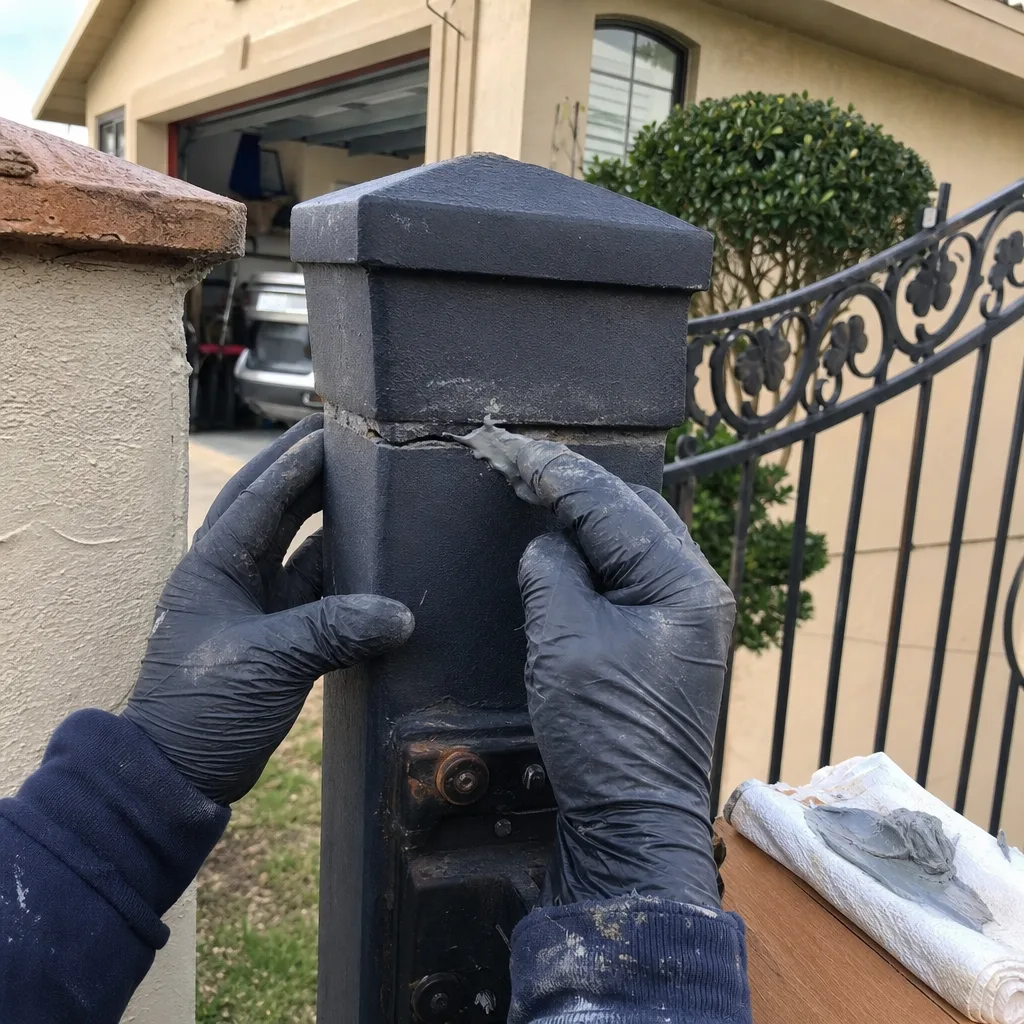
Texas doesn’t enforce a uniform statewide residential building code. The state adopts the International Residential Code as a baseline, then each municipality applies its own amendments through its code of ordinances. Pearland follows the IRC with local amendments documented in the Pearland Code of Ordinances, and that’s the layer where gate-specific rules actually live. If you’re comparing advice from a Dallas forum or a Houston contractor, be careful: the answer in Pearland can differ.
The IRC itself, in Chapter 1 and its administrative provisions, sets the permit threshold based on whether work qualifies as structural or involves systems regulated by the code. A fence and its gates are addressed in Chapter 3, but the permit trigger mostly comes down to footings, electrical, and structural connections, not the gate leaf itself. Replacing a hinge doesn’t touch those. Pouring concrete to set a new post does.
Pearland’s local amendments include specific language about fences and accessory structures. The city’s permit counter generally treats like-for-like hardware replacement as exempt from permit requirements, while anything that changes the foundation or structural connection points into the ground is reviewable. If a gate post is embedded in concrete and that concrete is being removed or enlarged, assume a permit review is in play until the city says otherwise.
The electrical side also matters. A gate operator that plugs into an existing GFCI outlet doesn’t trigger an electrical permit in most Pearland residential cases. Running a new dedicated circuit from the panel to a driveway gate does. Trenching new conduit for low-voltage accessory wiring is a gray area: the low-voltage wiring itself usually isn’t permit-triggering, but the trench and any concrete work around it can be. If you’re not sure, a five-minute call to the Pearland Development Services Office with a description of the scope settles it, and that call costs nothing.
When a Permit IS Required in Pearland: The Specific Triggers
Here are the specific scenarios where a Pearland homeowner should expect a permit on gate work. This list doesn’t come from a generic state guide; it comes from the way Pearland applies the IRC in practice on residential properties.
- New footings for gate posts. If a post needs to be set in new concrete, the footing depth and diameter fall under the structural provisions of the code. Pearland’s soil, much of it gumbo clay that expands and contracts with moisture, makes proper footing design a real concern, and inspectors want to see the hole before the concrete goes in.
- Relocating or adding posts. Widening a driveway opening, moving a gate line, or adding a second leaf means new load-bearing members. That’s a structural change.
- Masonry columns or piers. Adding brick, stone, or CMU columns to support a gate is the text of a permit trigger. These are heavy, they’re permanent, and they’re anchored to the ground.
- New underground electrical conduit. Running a new line from the house panel to a gate operator location requires an electrical permit in Pearland when the run is a new circuit. Trench depth and conduit type are code items.
- Changing the gate’s structural system. Converting from a swing gate to a slide gate usually requires a new track, a new foundation for the operator pad, and new end stops. That’s modification, not replacement.
What does NOT require a permit in Pearland: replacing a failed operator motor with a compatible unit on the same mounting position, replacing hinges or rollers, repairing or replacing pickets and rails in the same location, swapping a photo-eye, replacing a control board, rewiring within an existing operator housing, and adjusting the gate’s travel limits. When in doubt, ask for the city’s determination in writing before work starts. That request takes one day, and it protects you.
UL 325 Compliance: What a Code-Compliant Automatic Gate Looks Like
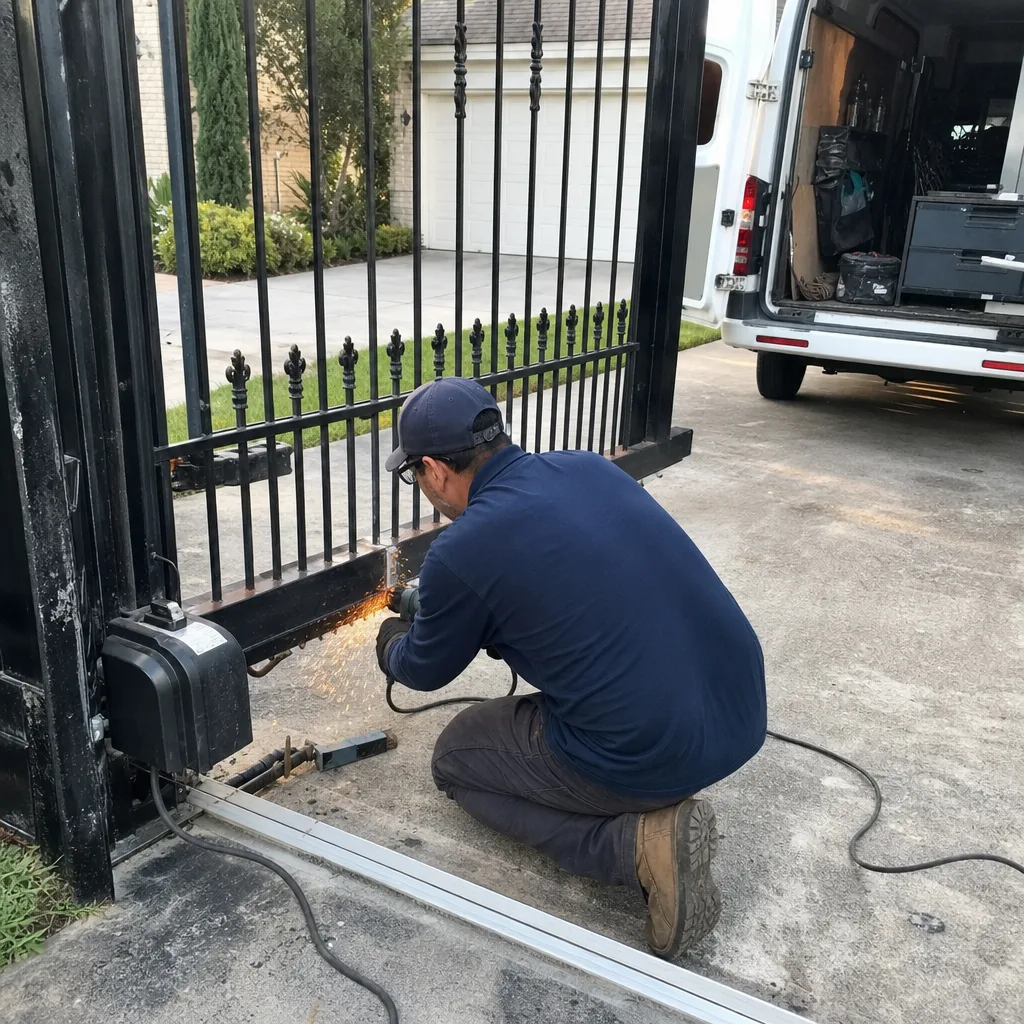
UL 325 is the national safety standard for automatic gate operators, and it applies in Pearland whether or not a permit was required for the work. The standard exists because automatic gates have injured people, and the rules are enforced through product listing, not through a city permit in most residential cases. If an operator doesn’t meet UL 325, it isn’t code-compliant to install it. That’s a hard line.
A UL 325 compliant installation includes these elements:
- Entrapment protection. Each operator must include at least two independent means of entrapment protection. In practice for residential gates, that means a pair of photo-eyes (infrared beams that reverse the gate if something crosses its path) plus an inherent reversing mechanism that detects resistance and reverses the gate. A single photo-eye is not enough.
- Warning signage. UL 325 requires specific warning signs, mounted on both sides of the gate and visible to pedestrians. The signs have to meet size and content requirements, not just any “caution” placard.
- Operator controls placement. Manual controls for an operator have to be positioned so a user can’t reach through or over the gate to touch them. That means the control station sits at least as far from the gate as the gate’s travel distance, or it’s mounted so the user can’t contact the gate while operating it.
- Gate speed and force limits. The operator’s force setting has to be low enough that the gate reverses on contact with an obstruction, not just at the end of travel. Speed limits also apply, though most residential operators from major brands ship configured well within those limits.
What does a code-compliant installation look like in writing? It looks like a technician who can hand you a record showing which photo-eyes were installed and where, what the force setting was set to after testing, and a signed confirmation that the operator was tested for reversal at three points along the gate’s travel. That’s the documentation path Vance Gate Repair Pearland follows on every automatic gate job, and it’s the same discipline Adrian Vance carried over from commercial access-control work starting in 2014. For how to hire a gate repair contractor in Pearland, look for this level of documentation. If your installer can’t produce that, you don’t actually know the gate is compliant.
One more thing on UL 325: it’s not a city inspection item in most Pearland residential cases. The city doesn’t send an inspector to test your photo-eyes. That means compliance is on the installing contractor and the homeowner, which is why the written record matters as much as it does.
What Happens During a Gate Permit Inspection in Pearland
When a permit is required and pulled, the inspection process is straightforward but specific. Here’s the step-by-step sequence as it typically runs in Pearland for residential gate work.
- The footing inspection. For any new post or operator pad, the inspector comes out after the hole is dug and rebar is placed, but before concrete is poured. They check footing depth, hole diameter, and reinforcing steel. Pearland’s structural inspectors are looking for footings deep enough to get below the zone of movement in the clay soil. If the hole gets poured before inspection, expect to be asked to expose the footing or, in the worst case, remove and redo it.
- The final inspection. After the gate is installed, the inspector returns to confirm the work matches the approved scope. They’ll check post plumb, gate attachment, operator mounting, and whether any electrical work matches the approved plan. On automatic gates, they may ask whether entrapment protection is installed but will not typically test UL 325 compliance themselves.
- Documentation close-out. The permit is closed when the final inspection passes. You’ll get a record of the permitted scope and the inspection results. Keep that paper. It’s the document you’ll want if you ever sell the house.
Here’s the part that catches homeowners off guard: a permit inspection is not a safety audit of your gate. It verifies that the structural and electrical work matches code minimums for the permitted scope. Your gate’s ongoing safety, especially on automatic operators, is maintained through the equipment’s own design and the installer’s practices, not through city enforcement. Learn the gate repair warning signs every Pearland homeowner should watch for. That’s another reason the written record from your installer matters regardless of permit status.
How to Verify Whether Your Contractor Should Have Pulled a Permit
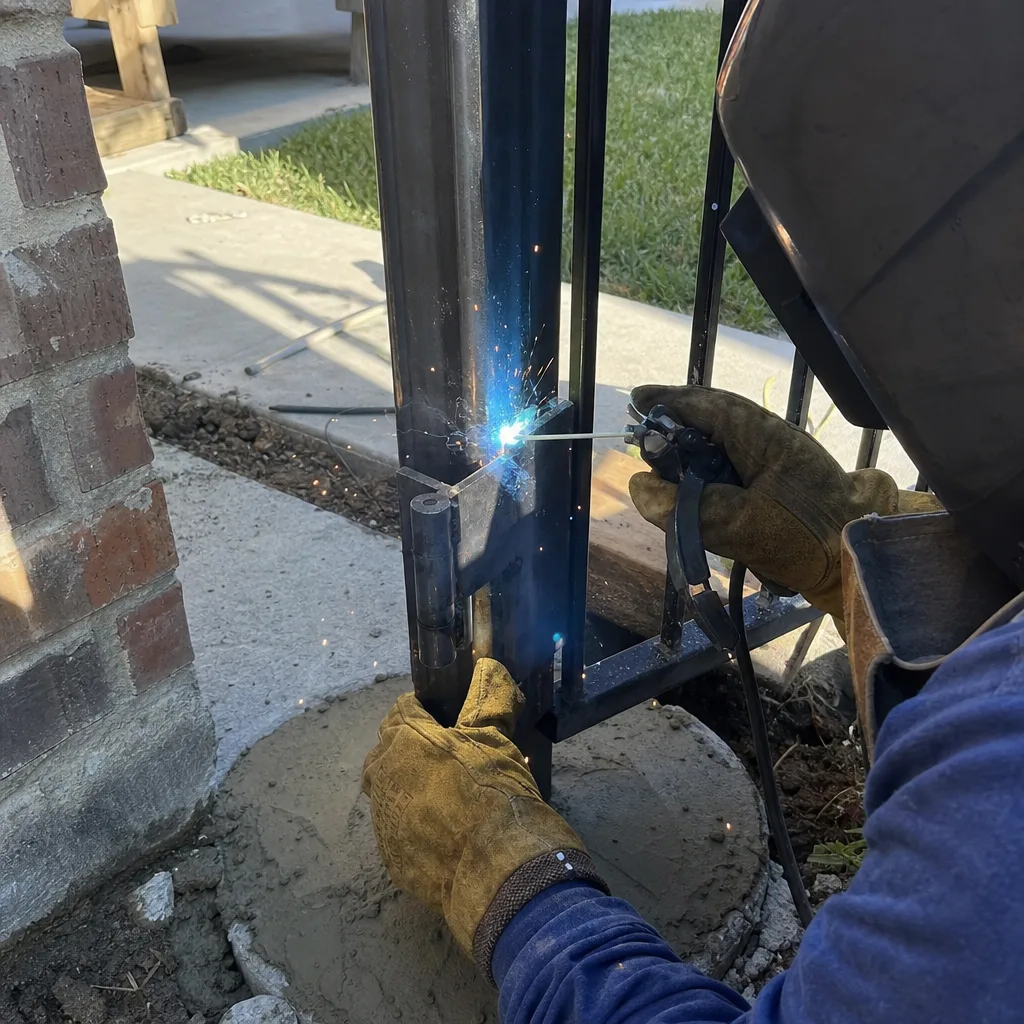
If a contractor did work on your Pearland gate and told you no permit was needed, you should be able to verify that yourself in under an hour. Here’s the process.
- Classify the work. Go back to the three categories. Did they replace like-for-like, perform maintenance, or did they pour concrete, move posts, or run new electrical? If it’s the first two, a permit was almost certainly not required. If it’s the third, keep going.
- Call Pearland Development Services. Describe the scope in plain language. Specifically mention whether new concrete was poured, whether posts moved, and whether new electrical conduit was run. Ask if a permit would have been required for that scope. Note the name of the person you speak with.
- Check the permit record, if applicable. If the city says a permit should have been pulled, ask the contractor for the permit number. If they can’t produce one, the work was likely unpermitted. You’re not in trouble for the contractor’s failure; Pearland’s process allows for retroactive permits in many cases, and the city works with homeowners to correct the record.
- Request the retroactive permit. If the work was done without a required permit, the contractor should pull the permit and schedule the inspection. If the contractor refuses, you can pull a permit as the homeowner. The cost is modest compared to the disclosure headache at resale.
A quick note on how real contractors behave: a reputable Pearland gate company will tell you the permit category before work starts, in writing. Not “we’ll handle it.” A sentence in the written scope that says “No permit required: replacement-in-kind per IRC Chapter 1, confirmed with City of Pearland” or “Permit required: new post footing, permit to be pulled by contractor.” If the classification isn’t on the paper, the conversation hasn’t happened. At Vance Gate Repair Pearland, that classification sentence is part of every written scope, in plain English, before anyone picks up a tool. It’s Clause 1 of the Haven Standard: have it in writing.
Common Mistakes to Avoid
- Assuming all gate work is permit-free. The most expensive mistake we see isn’t a bad repair, it’s a footing poured without a permit that has to be exposed or redone after the fact. Verify the category before the concrete is mixed.
- Assuming all gate work requires a permit. The opposite error, and it’s common among contractors who build in a permit fee line item by default. If the work is like-for-like, pulling a permit adds time and cost with no code benefit. Ask for the code citation that requires it.
- Confusing UL 325 compliance with city permitting. They’re different systems. A permit doesn’t prove your gate meets UL 325, and UL 325 compliance doesn’t replace a required permit. You may need both.
- Paying the final invoice without the documentation. If the contractor says a permit wasn’t required, that determination should be in writing on the invoice or scope. If a permit was required, the permit number and inspection result should be provided. Don’t take a verbal “you’re fine.”
- Running new electrical without an electrical permit. Even if the gate structure itself needs no permit, a new circuit from the panel does. Trenching and burying conduit without the electrical permit creates the same resale exposure as structural work.
- Accepting a single photo-eye on an automatic gate. UL 325 requires two independent entrapment protections on residential operators. A single photo-eye means the installation wasn’t code-compliant, regardless of what the invoice says.
- Replacing a gate leaf with a heavier one without checking the posts. You’re not just changing a panel; you’re changing the load on the footing. In Pearland’s clay soil, a heavier gate on an undersized footing fails slowly, then all at once. Get the footing checked before the heavier leaf goes up.
When to Call a Professional

You don’t need a professional to tell you a hinge replacement doesn’t require a permit. But these are the scenarios where a Pearland homeowner should get a written, code-aware assessment before any work begins: any time concrete is poured on the gate line, any time a post is moved or added, any time a gate leaf is replaced with a significantly heavier one, any time new electrical is run to the gate area, and any time an automatic operator is being installed on a gate that didn’t previously have one. In every one of those scenarios, the categorization question drives the legal exposure. Vance Gate Repair Pearland offers free estimates in Pearland, call (346) 253-3225, and every estimate includes the permit classification in writing. Our Vance Gate Repair Pearland home page has more on how we document every job.
Frequently Asked Questions
Most gate repairs in Pearland do not require a permit because they qualify as maintenance or replacement-in-kind, such as replacing hinges, rollers, pickets, motors, or photo-eyes in the same location. A permit is required only when the work involves structural changes like new footings, relocated posts, or new underground electrical. If you’re unsure, ask your contractor to state the classification in writing before work begins, and call (346) 253-3225 for an exact assessment of your gate’s situation, estimates are free. See our more guides & resources for additional help.
Gate permit fees in Pearland vary by scope and are set by the city’s development services fee schedule, usually a modest flat fee for a simple residential structural permit, with additional fees if the work includes electrical. The larger cost of a permit isn’t the fee itself, it’s the inspection scheduling and any corrections an inspector requires. For exact current pricing, call the Pearland Development Services Office, though keep in mind the fee is set by the city, not by any contractor.
For repair and safety assessment calls in Pearland, same-day availability is the norm, not the exception, call (346) 253-3225. A live person answers 24 hours a day, seven days a week. We’ll classify the work while we’re there, in writing, so you’ll know the answer to the permit question before you’ve committed to anything.
UL 325 is the national safety standard that governs automatic gate operators, requiring entrapment protection such as photo-eyes and reversing mechanisms, specific warning signage, and proper control placement. It matters because a gate operator that doesn’t meet UL 325 is not legal to install, even if no city permit is required for the work. Ask your installer for the written record showing what protection was installed and how it was tested. Our Gate Motor & Opener service in Pearland page explains what a full UL 325 compliant installation includes.
No, installing a new operator on an existing gate in Pearland typically requires no permit, as long as the operator mounts to the existing structure and plugs into an existing electrical outlet. If the job requires a new post, a new footing, or new electrical conduit run from the panel, a permit is likely required. The distinction matches the three-category system: operator-only replacement is replacement-in-kind, while any structural or electrical addition is modification.
If Pearland’s development services office confirms a permit was required and the contractor didn’t pull one, the work can usually be brought into compliance with a retroactive permit, which involves the same inspections as an original permit. The homeowner isn’t penalized for the contractor’s failure in most cases, but the exposure appears at resale if the work remains unpermitted. Get the classification confirmed in writing, then ask the contractor to pull the permit, or pull it yourself as the homeowner if they refuse.
The Bottom Line
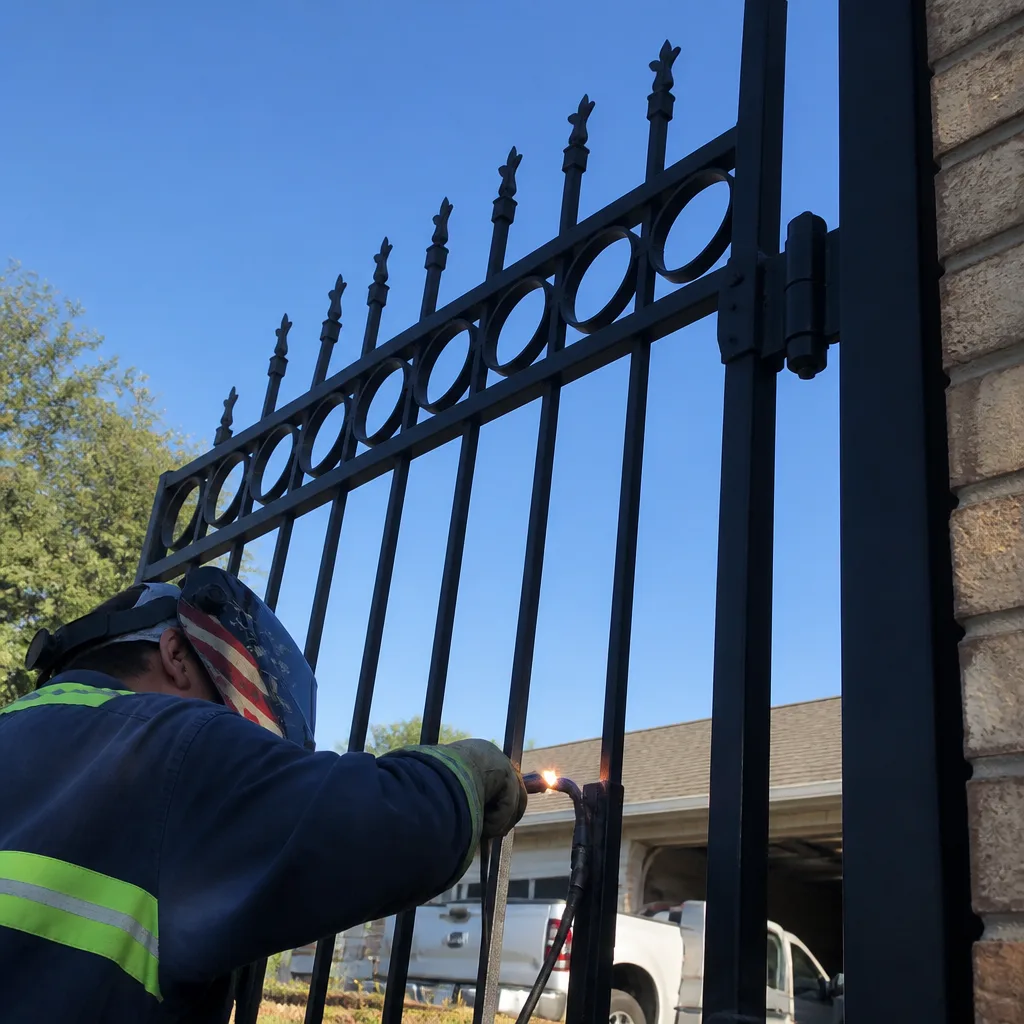
Gate repair permits in Pearland aren’t as mysterious as they’re made out to be, but they’re also not as forgiving as homeowners hope. The rule is simple: maintenance and replacement-in-kind, no permit. Structural modification or new electrical, permit. Automatic gates live under UL 325, a separate standard that the city doesn’t inspect but which still binds every installation, and no amount of verbal assurance replaces a written record of what was done. If you’re planning gate work in Pearland, classify it first, get the classification on paper, and keep that paper. The best gate repair in Pearland is installed with proper permits and documentation, and our gate repair service in Pearland follows that standard on every visit.
Need a written classification for your gate project? Call Vance Gate Repair Pearland at (346) 253-3225. A live person answers, the estimate is free, and the permit category is on the paper before anyone picks up a tool.
Written by Adrian Vance, Owner at Vance Gate Repair Pearland, serving Pearland since 2014.