
Last updated September 20, 2026
Free on-site gate assessment - hinges, posts, and your LiftMaster or Nice gate operator checked before anything is quoted
The assessment is free and the quote is the invoice.

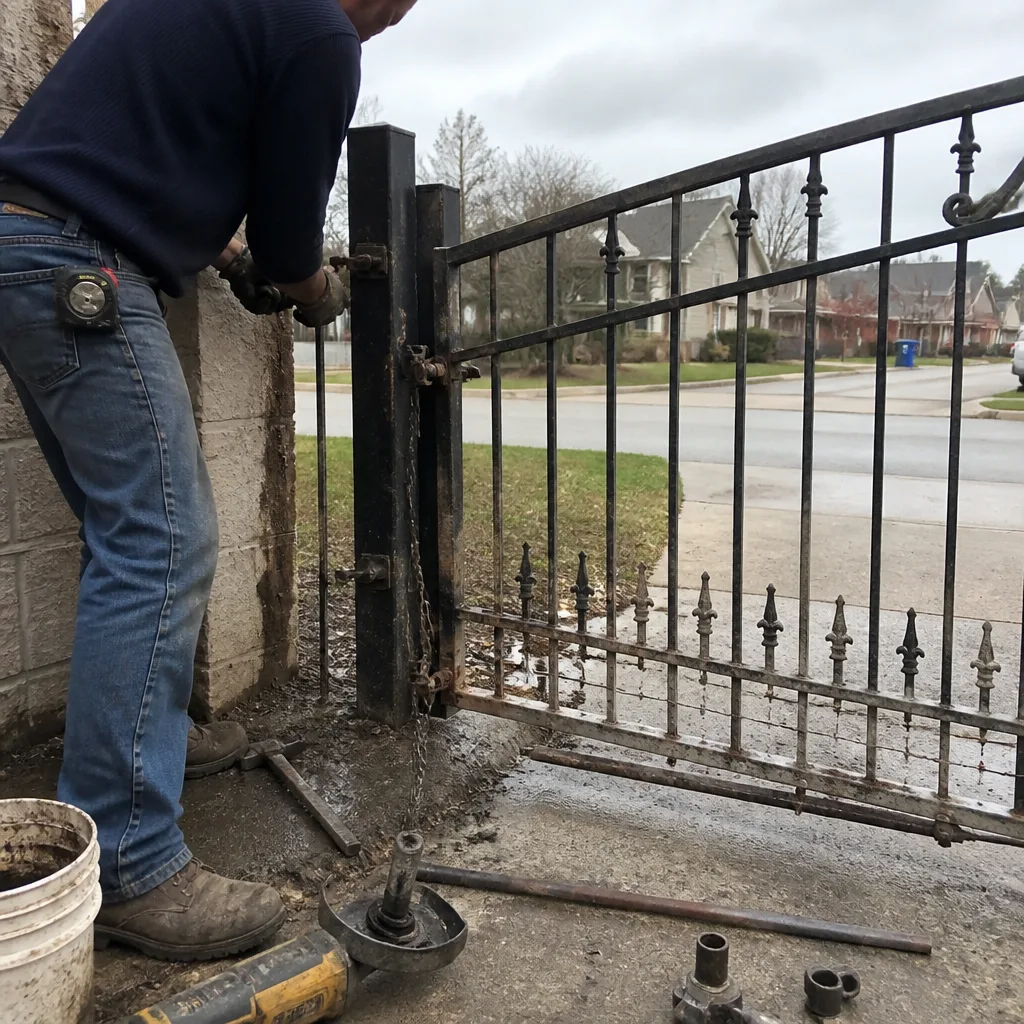 Before
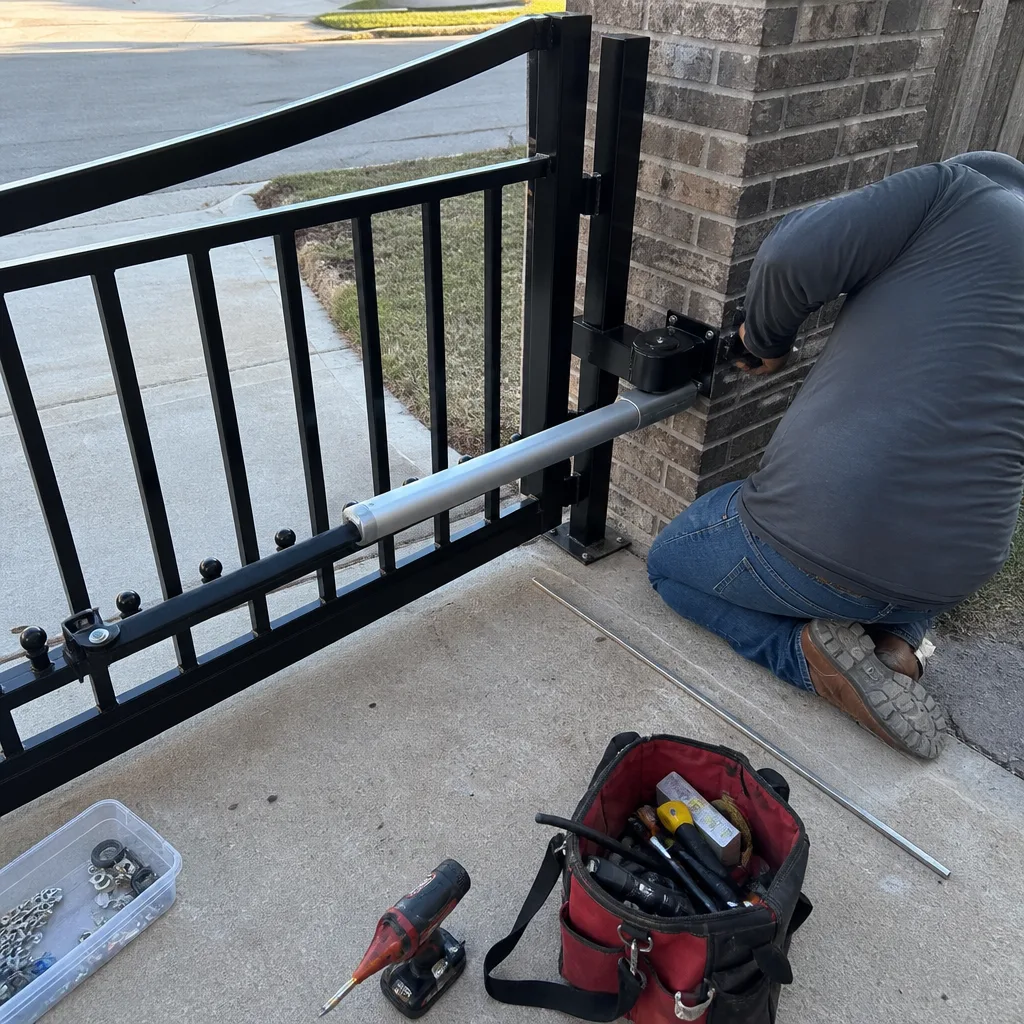 After
After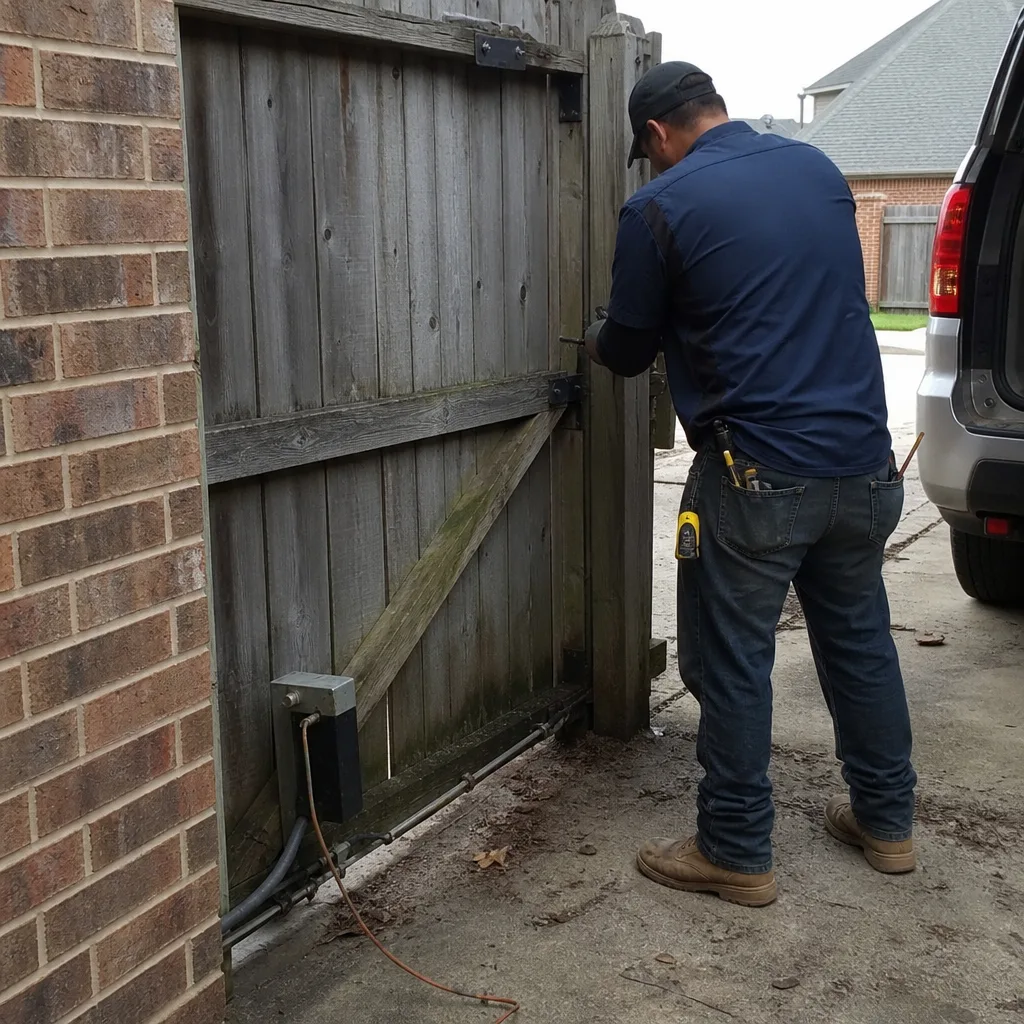 Before
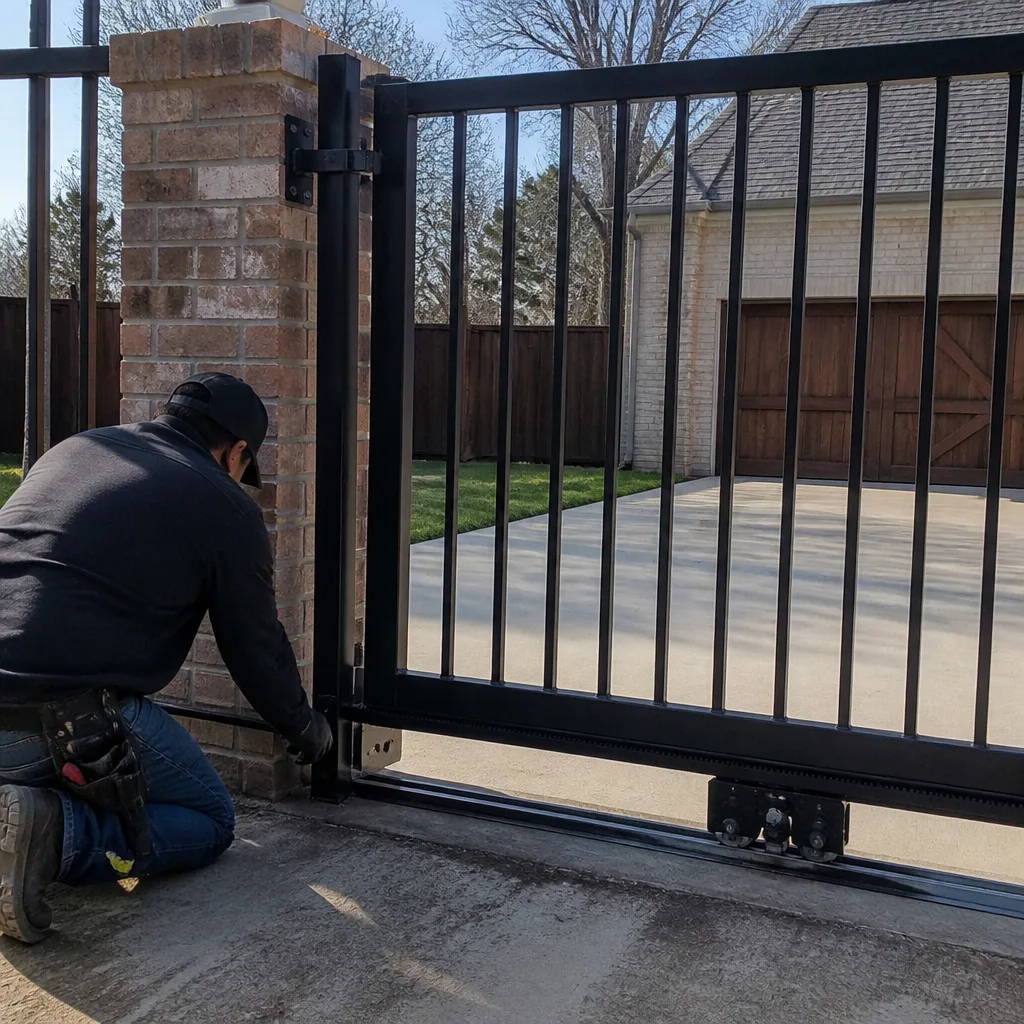 After
After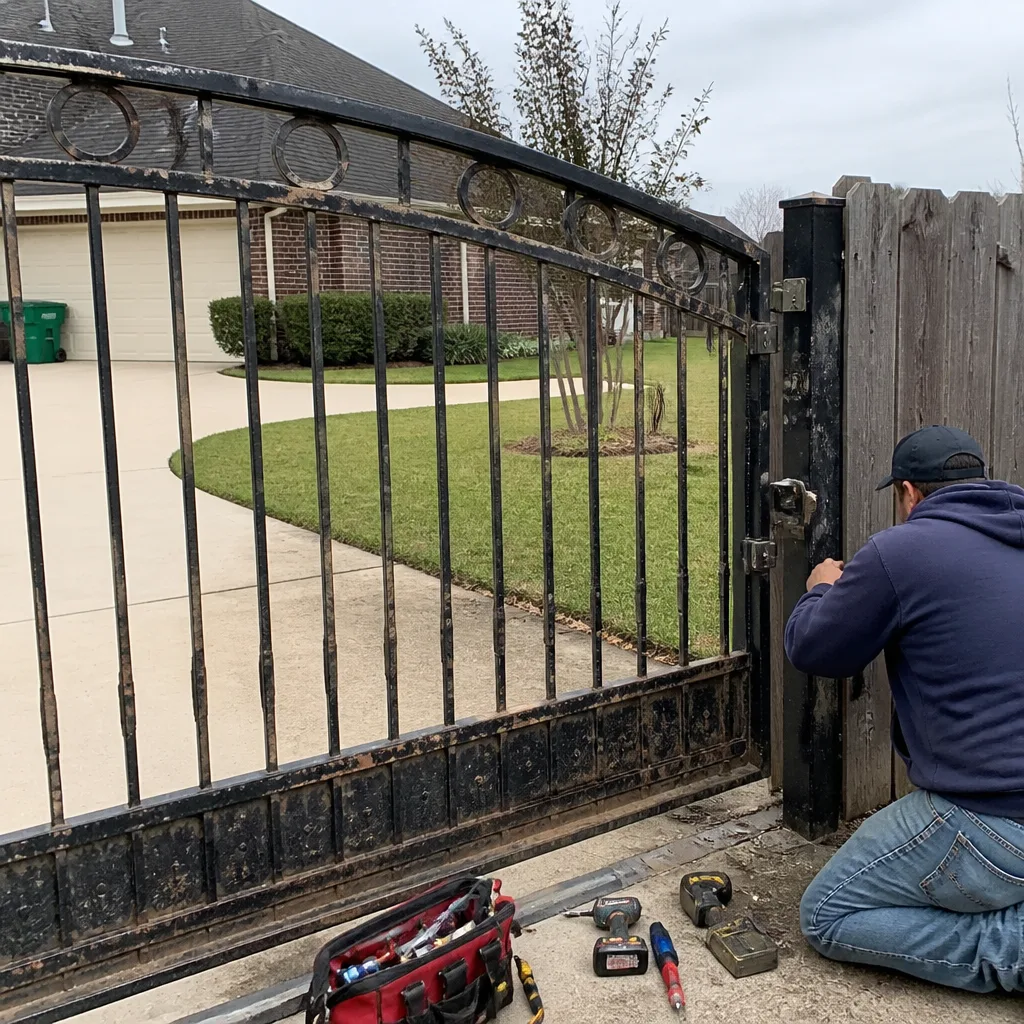 Before
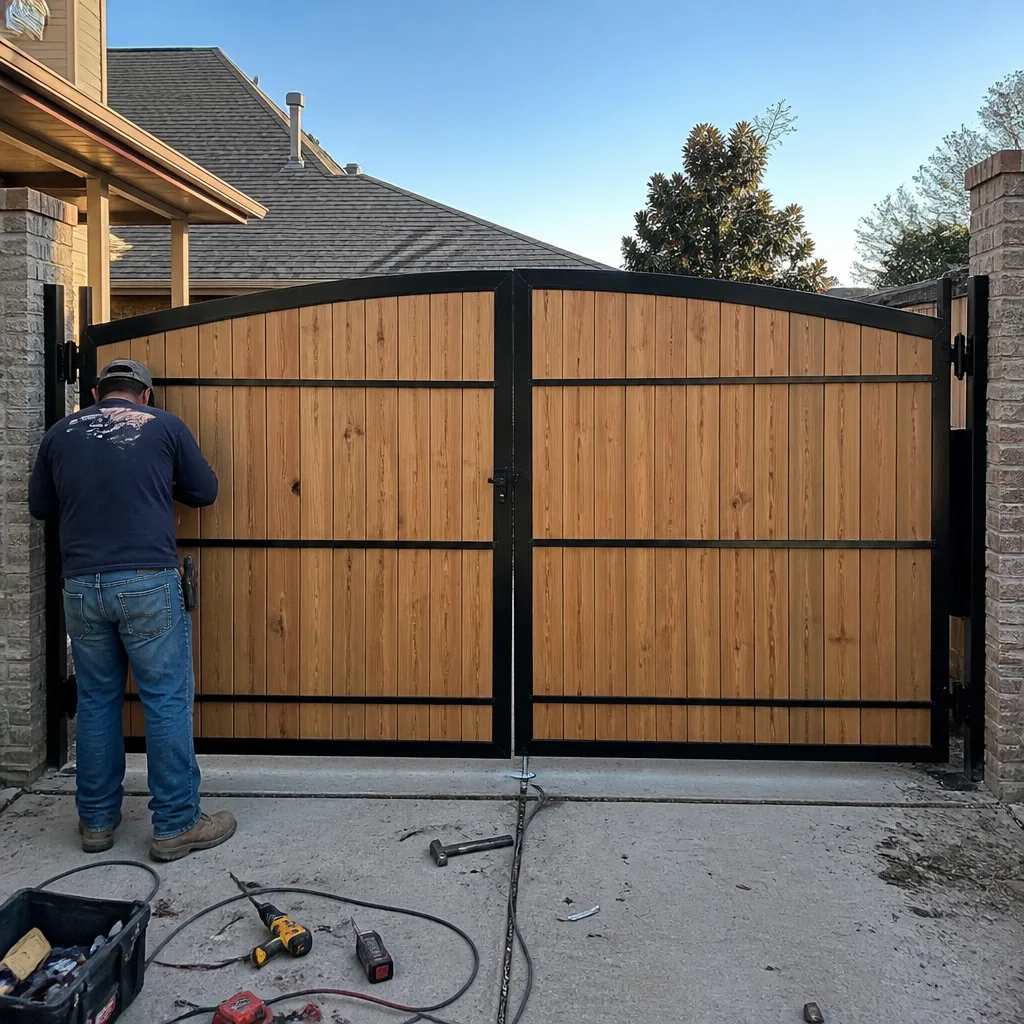 After
AfterSeasonal Gate Repair Care for Pearland: Year-Round Homeowner’s Guide
Pearland doesn’t really do seasons the way the rest of the country does. What Pearland does is humidity, storm water, the occasional hard freeze, and a narrow dry window in late fall and early winter. Each of those puts a different kind of stress on a driveway gate, and most of it happens invisibly at the post base, inside the operator housing, or along the weld seams. This guide walks through what actually fails in each part of the Pearland year, what to inspect and when, and how to build a dated photo record so you can see corrosion and wear progressing before a repair turns into a replacement. It’s written from the ground up for Vance Gate Repair Pearland home territory: flat lots, clay-heavy soil, high groundwater, and air you can feel.
Quick Answer
Seasonal gate care in Pearland means working around four real conditions: a long humidity-driven corrosion season from roughly April through October, a storm season that floods post bases and stresses operators, a rare freeze window that tests batteries and lubricants, and a short dry window from November into January when deferred maintenance actually sticks. The highest-value routine is simple: clear drain channels before storm season, photograph the post bases and weld seams quarterly, and schedule any seal or paint work for the dry window. Most seasonal gate failures trace back to water sitting where it should have drained.
Table of Contents
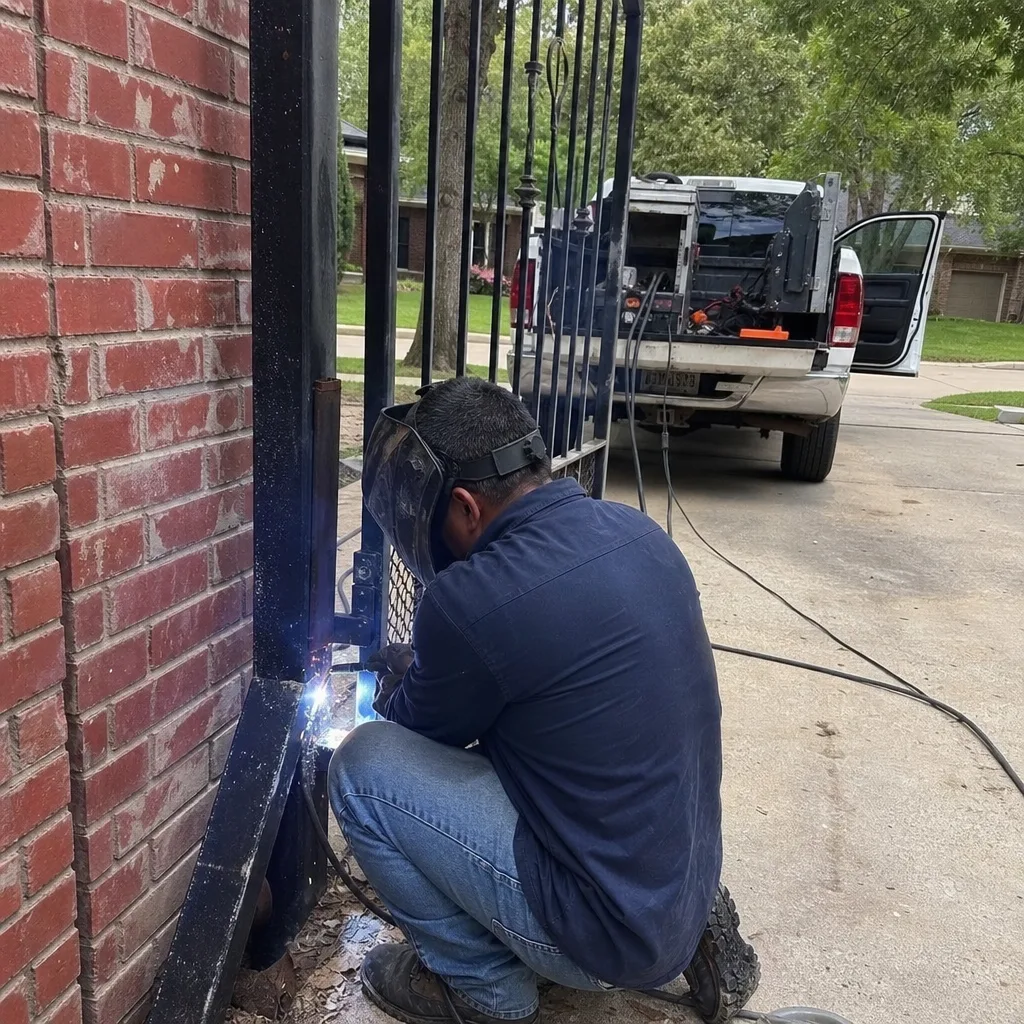
- Pearland’s Actual Climate and What It Does to Gates
- The Pre-Storm-Season Checklist for Pearland Gates
- What to Inspect After a Pearland Hard Freeze
- The Dry Window: Maintenance That Requires Stable Weather
- Building a Dated Photo Record by Season
- Seasonal Motor and Opener Care by Brand
- Common Mistakes to Avoid
- When to Call a Professional
- Frequently Asked Questions
- The Bottom Line
BeforeAfterPearland’s Actual Climate and What It Does to Gates
The standard four-season gate maintenance calendar doesn’t map onto Pearland. A spring checklist written for Dallas assumes a dry, mild shoulder season. Spring in Pearland is already humid, and the ground is often saturated from early storm fronts. What matters here is not the month; it’s the condition the gate is sitting in.
Here’s how Pearland’s year actually breaks down against gate stress:
- Humidity corrosion season (April through October): The gate posts, hinge plates, weld seams, and the inside of the operator housing are exposed to 70-percent-plus humidity for months at a time. Bare steel and damaged powder coat begin oxidizing within weeks. We regularly see hinge welds on Pearland swing gates lose material faster than the same weld on a comparable gate in drier parts of Texas.
- Storm and flood-stress season (May through September, with a second peak in October): Flat lots and clay-dominant soil mean water does not move away from post bases quickly. A blocked drain channel at the base of a slide gate or a post that sits in a low spot will hold water for days after a heavy storm. That standing water attacks the post base and accelerates the same corrosion already underway from the humidity.
- Rare hard-freeze events (January and February): Pearland doesn’t freeze every winter, but when it does, it usually dips into the high 20s for a night or two, sometimes with precipitation. Gates that have lived through years of humidity hit the freeze with moisture already inside seals, lubricant that has absorbed water, and batteries that lose capacity in the cold.
- The dry window (November through January): This is the stretch when relative humidity drops, the ground dries out, and temperatures stay mild enough for paints, sealants, and adhesives to cure properly. It’s short, and it’s the only practical time for maintenance that requires stable, dry conditions.
The useful way to think about it: Pearland has one long season of slow attack, one season of sudden water load, one brief freeze risk, and one narrow window to catch up. Plan around that and the schedule writes itself.
The Pre-Storm-Season Checklist for Pearland Gates
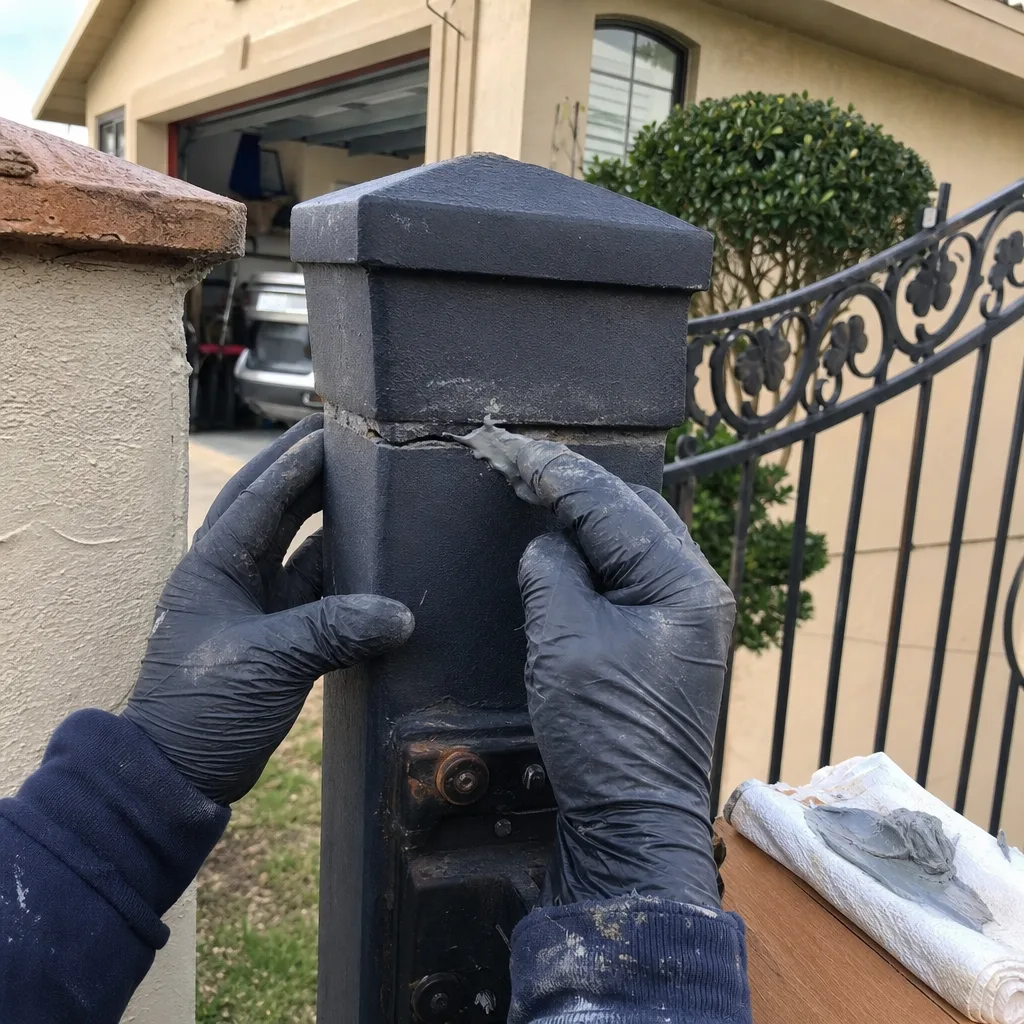
The time to inspect for storm readiness in Pearland is late April, before the first big Gulf-front thunderstorms settle in. After the season starts, the ground stays wet and the window for low-humidity repairs closes. Here’s the checklist we walk through with Pearland homeowners every spring.
- Clear every drain channel and weep hole. Slide-gate tracks and post bases collect leaf litter, grass clippings, and silt. In flat-lot Pearland neighborhoods, a blocked drain means water pools at the post base during the first heavy rain. Pull the debris, flush the channel with a hose, and confirm the water actually moves away from the gate structure.
- Inspect the seal at post bases. Look at the point where the post meets the concrete or the ground. Cracks in the grout or a seal that has pulled away lets water down into the post pocket. On steel posts, this is where deep rust starts, hidden from view. Reseal with a polyurethane caulk made for exterior metal-to-concrete joints. Do this work in a dry stretch, not between storms.
- Check the operator housing weatherproofing. The operator is the motor and control board in one weather-rated box. The gasket around the housing door compresses over time. On Pearland installs, we see gaskets flatten after two or three summers of heat and humidity. Test the seal by closing the door on a strip of paper: if the paper pulls out without resistance, the gasket needs replacement.
- Verify the photo-eye alignment. A photo-eye, the infrared beam that stops the gate if anything crosses the path, drifts out of alignment when the gate flexes in wind or when the post shifts slightly in wet soil. A misaligned beam usually defaults to safety mode and the gate refuses to close, which leaves the driveway open during a storm.
- Test the battery backup. Storm season brings power flickers and outages. The battery in the operator’s backup system should hold a load. If the battery is more than three years old and has not been tested, test it now. A gate that fails closed during an outage is a driveway problem; a gate that fails open is a security problem.
For Gate Repair in Pearland work that involves water intrusion or operator faults, we write the scope and the price before any tools come off the truck, and we photograph the condition we found and the condition we left. That record matters when you’re tracking a problem that only shows up in heavy rain.
What to Inspect After a Pearland Hard Freeze
When Pearland drops below freezing, usually in January or February, the damage to a gate system doesn’t always appear that morning. It shows up days or weeks later, after the ground thaws and the metal goes through its first expansion cycle. Here’s what to check after the rare hard freeze.
The post bases and the gate frame
Water that sat in hairline cracks or behind seals before the freeze expands roughly nine percent in volume when it turns to ice. That expansion widens cracks in concrete footing, shears old grout, and can push a weld seam apart at the point where it was already thin from corrosion. After the thaw, walk the gate post with your hand: look for fresh hairline cracks radiating from the post base, a gap between the post and the concrete, or a weld seam showing rust-colored fissures that weren’t visible before.
The lubricant
Most gate hinges and slide-track rollers in Pearland are lubricated with a general-purpose grease. Over a humid season, that grease absorbs a small amount of moisture. When it freezes, the lubricant thickens and can temporarily bind the gate. When it thaws, the moisture separates and the lubricant thins and runs. If the gate moves stiffly after a freeze or the hinges sound dry, the lubricant has been compromised. Clean and re-grease using a lubricant rated for exterior metal moving parts.
The battery backup
Just because the battery tested fine in April doesn’t mean it survives a January freeze. Batteries lose capacity in the cold, and a battery that’s already near end-of-life will fail under freeze load. After a freeze event, unplug the operator and verify the gate still opens and closes on battery power. If it moves slower than it did in warm weather or doesn’t move at all, replace the battery before storm season.
None of this requires a gate replacement. These are all repairable conditions. The point is to catch them before the next storm cycle puts a load on an already weakened system. In our experience with Pearland gates from LiftMaster to BFT, a freeze followed by a week of rain is the combination most likely to reveal a hidden post-base problem.
The Dry Window: Maintenance That Requires Stable Weather
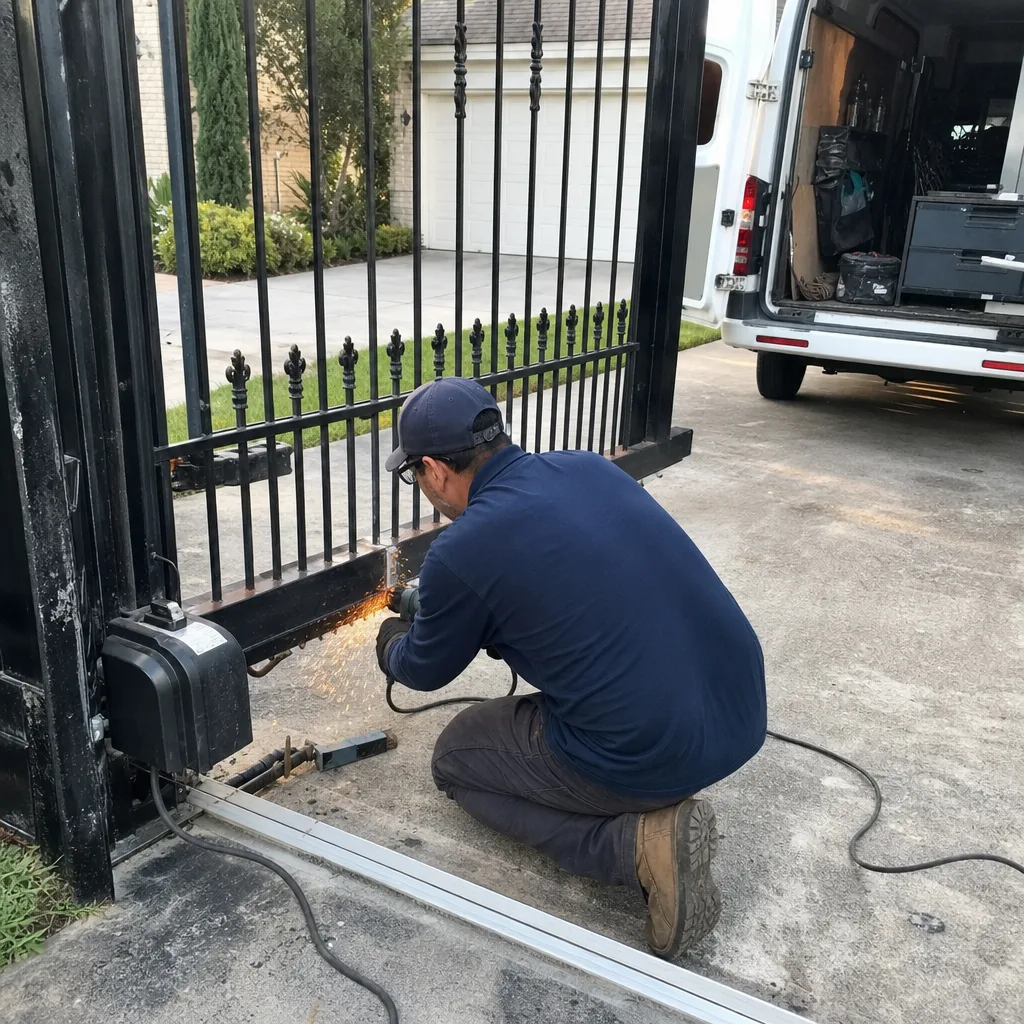
Pearland’s dry window is roughly November through January. Humidity drops, temperatures stay moderate, and the ground finally firms up after the fall rains. This is the window for work that won’t cure properly in humid air or on wet concrete.
Here’s the list we recommend scheduling during that stretch:
- Post-base resealing and repainting. Polyurethane caulk and metal paint need low humidity and stable temperatures to cure. Do this in the dry window and it lasts. Do it in June and it blisters.
- Rust treatment and weld repair. Wire-brush the corrosion, apply a rust converter, and paint the treated area. If a weld seam has thinned, this is the time to have a welder reinforce it and then repaint the repair. Once the humid season starts, the repair gets harder to do cleanly.
- Operator housing gasket replacement. The gasket material needs to compress and seat in dry conditions. Replacing a gasket in high humidity means sealing moisture inside the housing, which defeats the purpose.
- Track and roller deep cleaning. A slide-gate track collects an entire season of silt and grass clippings. Cleaning it out and replacing worn rollers in the dry window means the gate rides clean when the spring storms hit.
- Concrete crack repair at the post pocket. Any concrete patch or epoxy injection needs the concrete to be relatively dry to bond. Wet-season concrete repair fails from the inside out.
This is also the only sensible time in Pearland to plan a Gate Installation in Pearland. Footings cure in stable soil. The gate is aligned before the ground gets saturated. And the finished install is photographed and documented before weather complicates the record.
Building a Dated Photo Record by Season
The single most useful habit a Pearland homeowner can develop is simple: photograph your gate on a schedule. Not when it breaks. On a schedule. Here’s why and how to do it so the record actually tells you something a year later.
The logic is straightforward. Corrosion, post settling, and seal degradation all happen slowly enough that you won’t notice the change day to day. But put a photo from March next to a photo from November and the rust creep at the weld seam or the widening gap at the post base becomes obvious. The photo record turns a feeling, “the gate looks a little off,” into evidence, “the gap at the post base has opened from a quarter inch to three-eighths in eight months.”
Here’s a practical method that works in Pearland:
- Pick four dates a year: one in late spring before storm season, one in midsummer at peak humidity, one in the dry window, and one after any freeze event. Calendar them.
- Shoot the same six angles every time: the hinge side full-frame, the latch side full-frame, the post base close-up on each side, the weld seams top and bottom, the operator housing with the door open, and the track or wheel path from the driveway side.
- Store the photos in a folder named by date, not by problem. The point is to have a baseline, so when something changes, you can compare against a photo from before the change.
- Write two lines of notes each session: the date, the weather conditions over the previous two weeks, and anything you observed. Two lines. No more.
- Include one measurement. The gap between the gate and the post at the latch, or the distance from the gate bottom to the ground. A single number per session tells you more than a dozen photos of the same angle.
When you eventually call a gate company, this record shortens the diagnosis. The technician sees what changed and when. At Vance, we photograph every visit as a matter of course under the Haven Standard, and when a homeowner hands us a year of their own photos, the conversation about what failed and why gets faster and less expensive.
Seasonal Motor and Opener Care by Brand
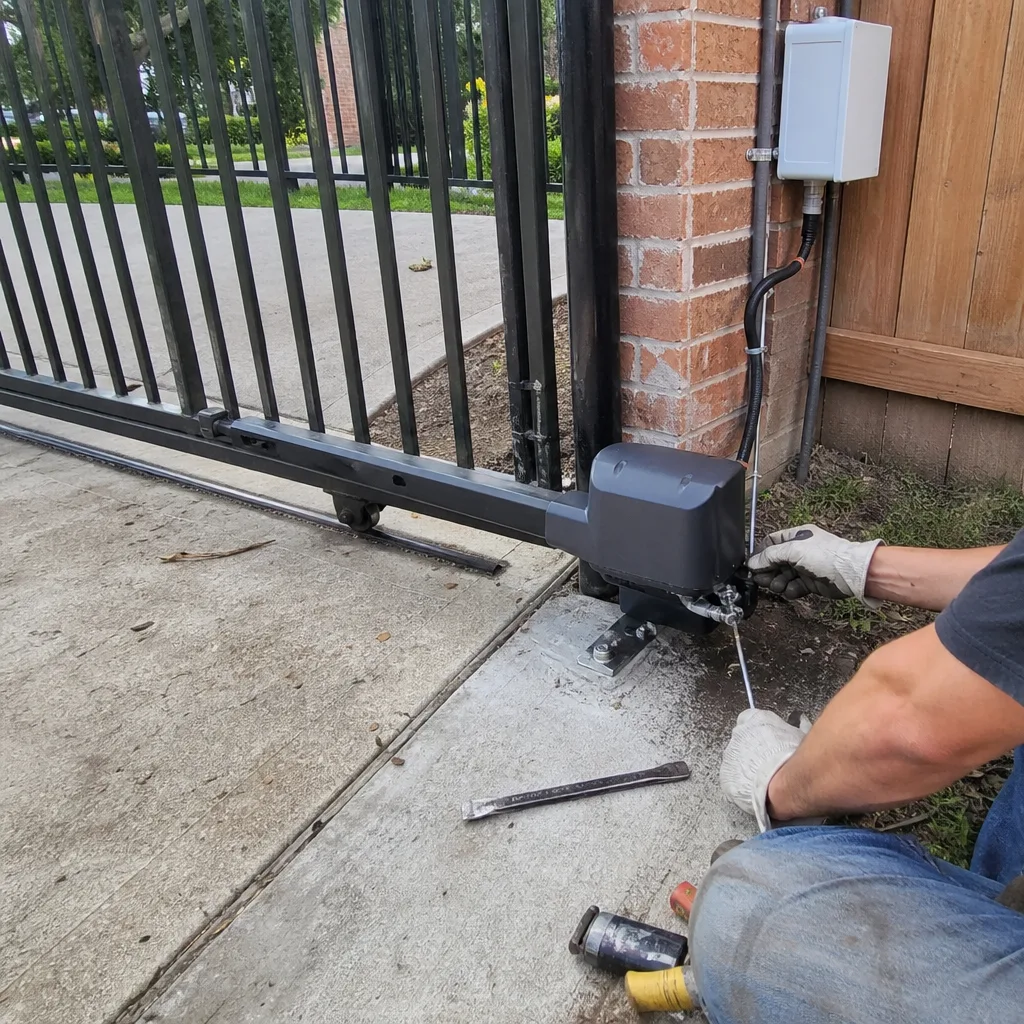
The seasonal schedule doesn’t change much by brand, but the failure patterns do. Here’s what we see with the operators most common on Pearland driveways.
LiftMaster: The DC-powered residential operators hold up well against humidity, but the logic board connections are the weak point in a wet season. A board that’s been repeatedly exposed to humid air inside a marginal housing gasket will develop corrosion at the terminal strip. The symptom is intermittent function: the gate works, then doesn’t, then works. In Pearland, if a LiftMaster operator behaves intermittently and it’s been humid, check the board connections first.
FAAC: The hydraulic operators are durable, but the hydraulic fluid is sensitive to thermal cycling. After a Pearland freeze-thaw cycle, we see seals weep slightly and air enter the system. The gate moves a little slow or jerky, and the fix is a fluid check and system bleed, not a replacement operator.
BFT: The electronic control boards in BFT operators are sensitive to voltage fluctuation, which is common in storm season when the grid flickers. A surge that doesn’t trip anything visible can scramble the limit-switch memory. The gate forgets where its travel ends are and stops short or overtravels. The fix is a limit re-learn and possibly a surge protector on the operator circuit.
Linear: These are common on older Pearland installs, and the main seasonal issue is the battery in the backup system. Linear operators are hard on their batteries in heat and humidity, and the battery often fails in the first freeze cycle after a hot summer. The motor itself is usually fine.
For any of these, the seasonal inspection is similar: check the housing seal, the board for visible corrosion, the battery capacity, and the limit settings. And for Gate Motor & Opener in Pearland service, we write the diagnosis and the price before any work starts, in writing, with the part number listed.
Common Mistakes to Avoid
- Following a generic four-season maintenance calendar. A March “spring tune-up” written for a drier climate misses the point in Pearland, where April already brings heavy rain and high humidity. The schedule should follow the Gulf climate pattern: pre-storm inspection in late April, mid-summer corrosion check, dry-window repair work in November and December, and a post-freeze inspection when one occurs.
- Ignoring the drain channel because the gate still works. The drain channel is the single most important seasonal detail on a Pearland slide gate. A gate can run fine for months while water is holding at the post base, slowly rusting the structural steel. By the time the gate shows a problem, the post is often too far gone to patch.
- Painting or sealing during humid months. Paint and sealant applied during Pearland’s long humid season blisters, peels, or fails to cure, and the repair doesn’t last. This work belongs in the dry window. If it’s done in June, expect to redo it in December.
- Testing the battery backup once a year and calling it done. A battery that tests fine in the spring can be near death by January. Test it in the dry window and again after any freeze event. Replace batteries on a calendar schedule, not when they fail.
- Photographing only when something breaks. A photo of a broken gate tells the technician what failed, but not how long it was failing or how fast it progressed. The dated seasonal photo record is the tool that turns a vague problem into a diagnosable one.
- Assuming a gate that works is a gate that’s healthy. In Pearland’s climate, the damage happens underneath and inside. A gate can open and close perfectly while the post base rusts and the board corrodes. The gate is the symptom; the post and the operator are the organs.
When to Call a Professional
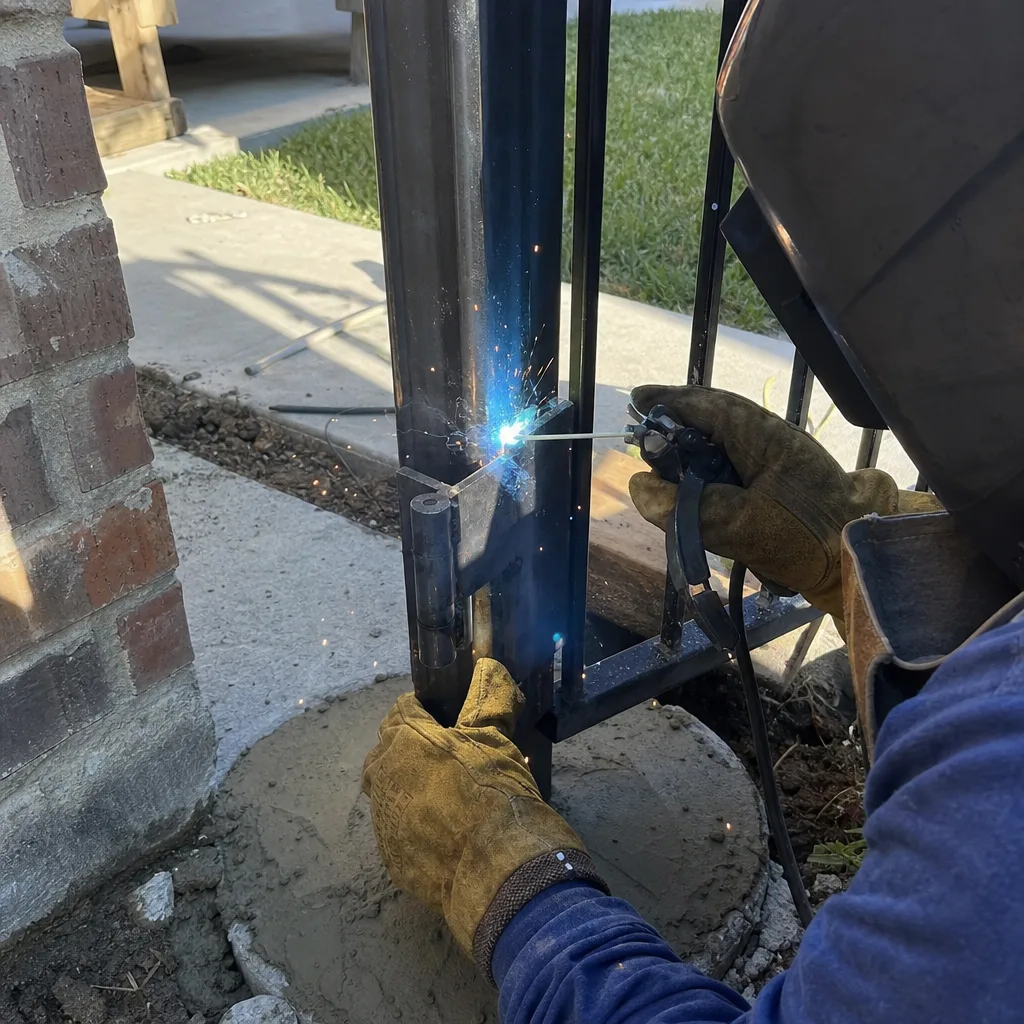
A seasonal checklist covers the homeowner-level inspection. But there are moments when calling a professional is the only responsible move, and knowing where that line is saves money in the long run. If the gate post shows a fresh crack after a freeze, if water has been standing at the base after storms and the post feels loose, or if the operator trips its breaker or behaves intermittently, don’t keep running the gate and hoping it works. Those are structural and electrical problems that get more expensive the longer they’re ignored. If the gate is heavy, under spring tension, or the operator is wired into a circuit you don’t fully understand, leave the hands-on work to someone trained for it. Gate springs and cables under load can cause serious injury when released incorrectly. Vance Gate Repair Pearland offers free estimates and a written scope on every job in Pearland. Call (346) 253-3225 and we’ll tell you what we see and what it costs before any tool leaves the truck.
Frequently Asked Questions
Inspect your gate four times a year in Pearland: once in late April before storm season, once in midsummer at peak humidity, once in November or December during the dry window, and once after any hard freeze. The inspections themselves take about 20 minutes and consist of checking the drain channels, post bases, weld seams, housing seal, and battery backup.
Yes. Pearland’s humidity from April through October keeps moisture on bare steel and damaged powder coat for months at a time, which accelerates corrosion at weld seams and post bases. A gate post that would take a decade to rust through in a dry climate can lose meaningful structural thickness in half that time in Pearland. The damage compounds when standing water from storms is added to the humidity load.
A seasonal inspection and basic tune-up, drain channel clearing, hinge lubrication, and housing-gasket check, typically runs between $95 and $180 in Pearland depending on gate size and access. Post-base resealing and rust treatment work during the dry window usually starts around $250 and goes up with the extent of the corrosion. At Vance, the price is written and agreed before any work starts. Call (346) 253-3225 for a free estimate on your specific gate.
The drain channel at the base of a slide gate or the seal at the post-to-concrete joint. Both are invisible in daily use, both collect water during Pearland storms, and both are responsible for the majority of the post-base corrosion we see. A clear drain channel and an intact post seal prevent more seasonal gate damage than any other two actions combined.
You can handle the inspection and the drain-channel clearance yourself. The work that requires a professional is resealing post bases, treating weld-seam corrosion, replacing operator gaskets, and any work that involves the gate springs, cables, or the operator’s internal wiring. A gate under spring or cable tension can cause serious injury if handled incorrectly, so leave that to a trained technician.
Yes. We service the major automation brands found on Pearland properties including LiftMaster, FAAC, BFT, and Linear, plus Ghost Controls, Viking, DoorKing, Elite, and Mighty Mule. If the operator on your gate is working, we repair the problem rather than steering you toward a replacement motor.
The Bottom Line

Seasonal gate care in Pearland comes down to understanding the actual climate: a long humid season of slow corrosion, a storm season that loads post bases with standing water, a rare freeze that tests batteries and welds, and a dry window that’s the only sensible time for repairs that require stable conditions. Four inspections a year, a clear drain channel before every storm season, a dated photo record, and the discipline to schedule paint and seal work between November and January will extend the life of any Pearland gate by years. The gate itself will tell you when it’s failing, if you’re watching the right places. Gate Repair in Pearland doesn’t have to be a surprise. Call (346) 253-3225 for a free estimate, and we’ll give you the written price before any work begins.
Written by Adrian Vance, Owner at Vance Gate Repair Pearland, serving Pearland since 2014.