
Last updated September 20, 2026
Free on-site gate assessment - hinges, posts, and your LiftMaster or Nice gate operator checked before anything is quoted
The assessment is free and the quote is the invoice.

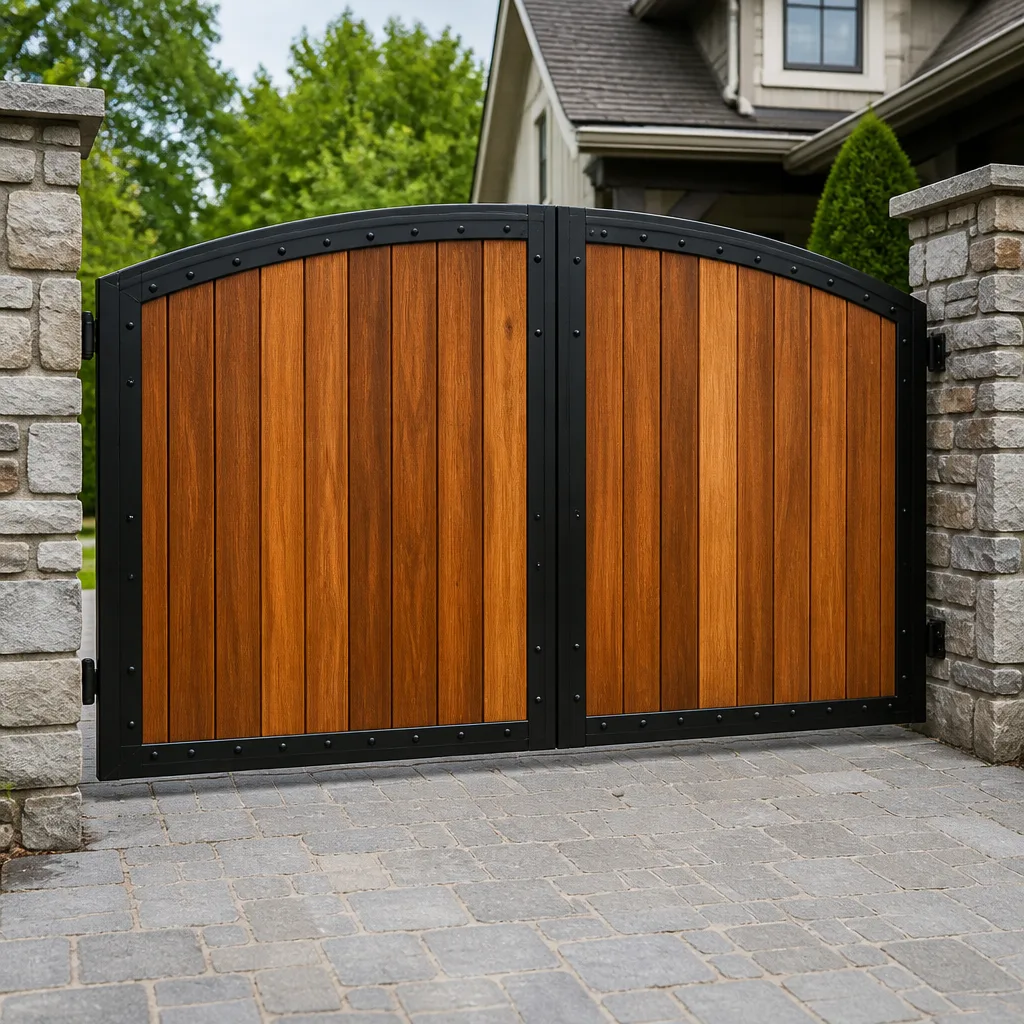
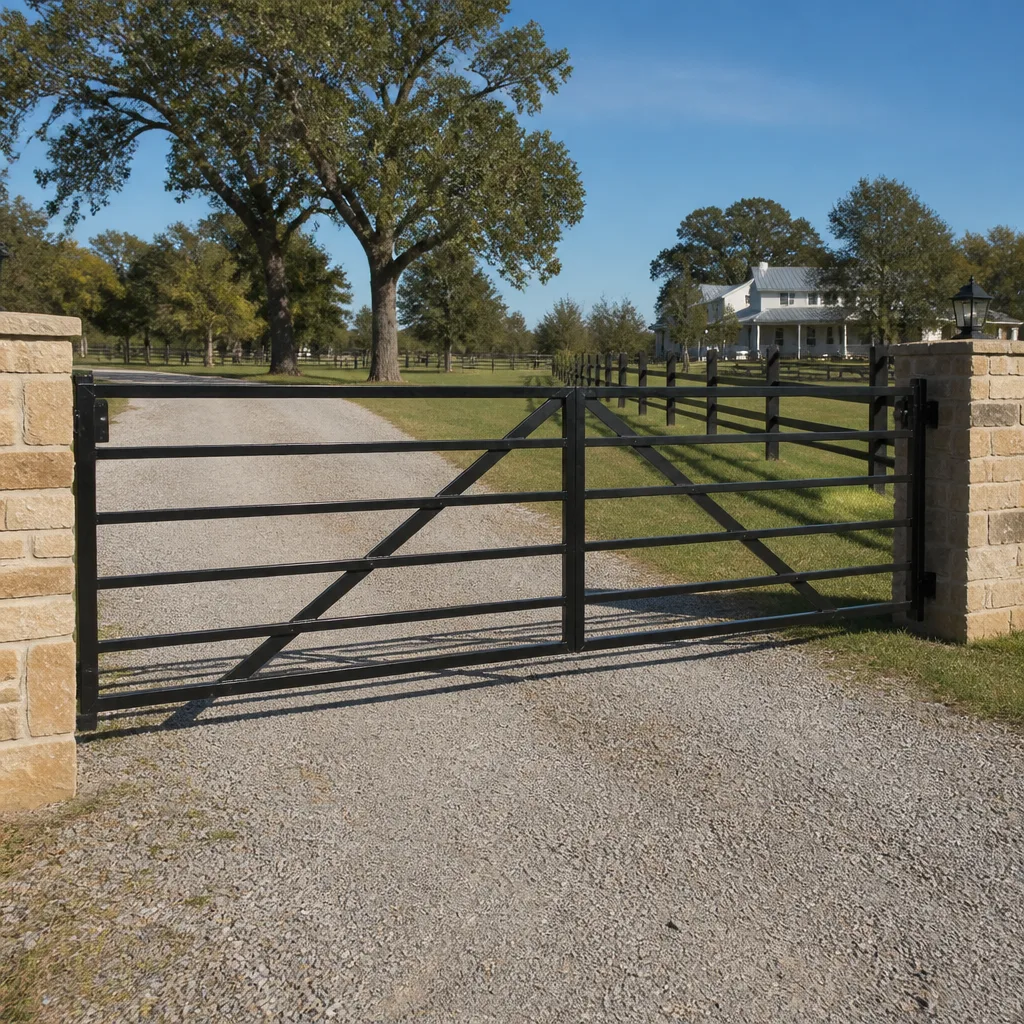
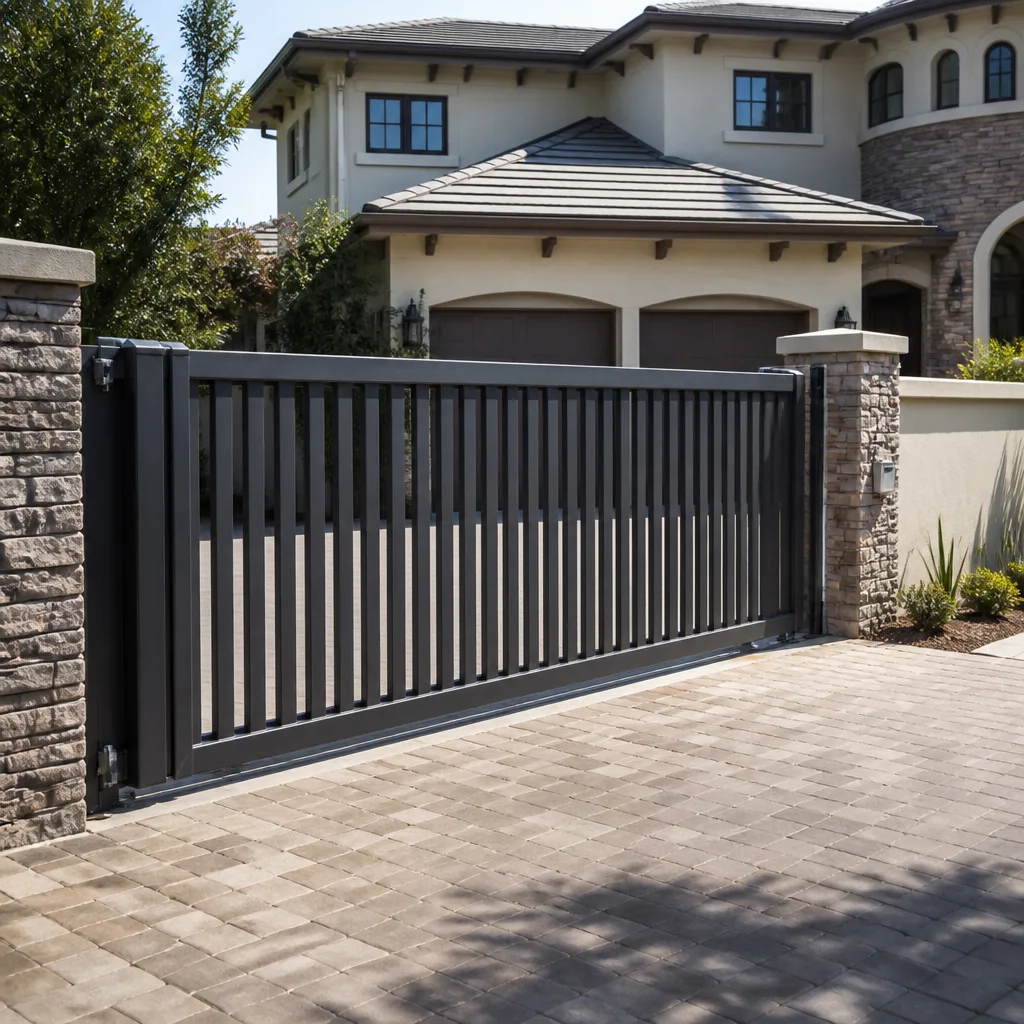
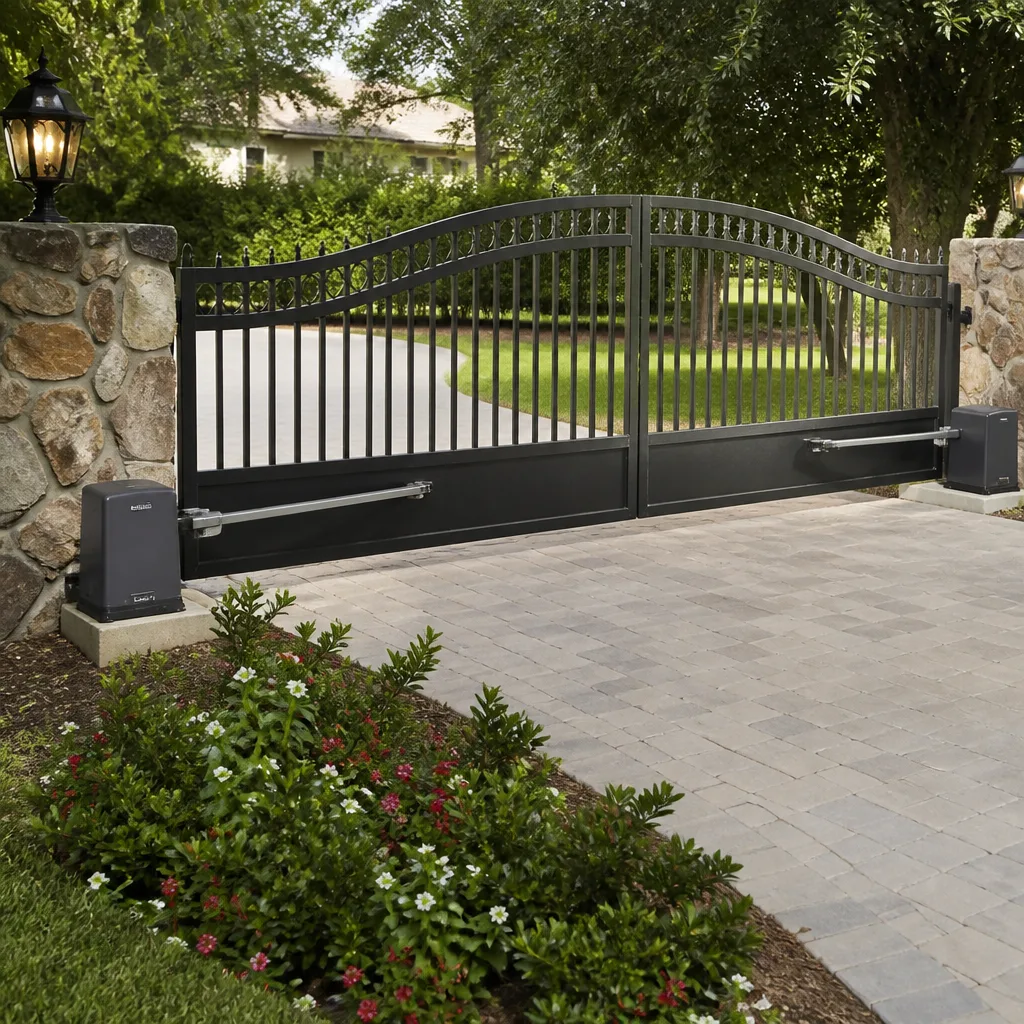
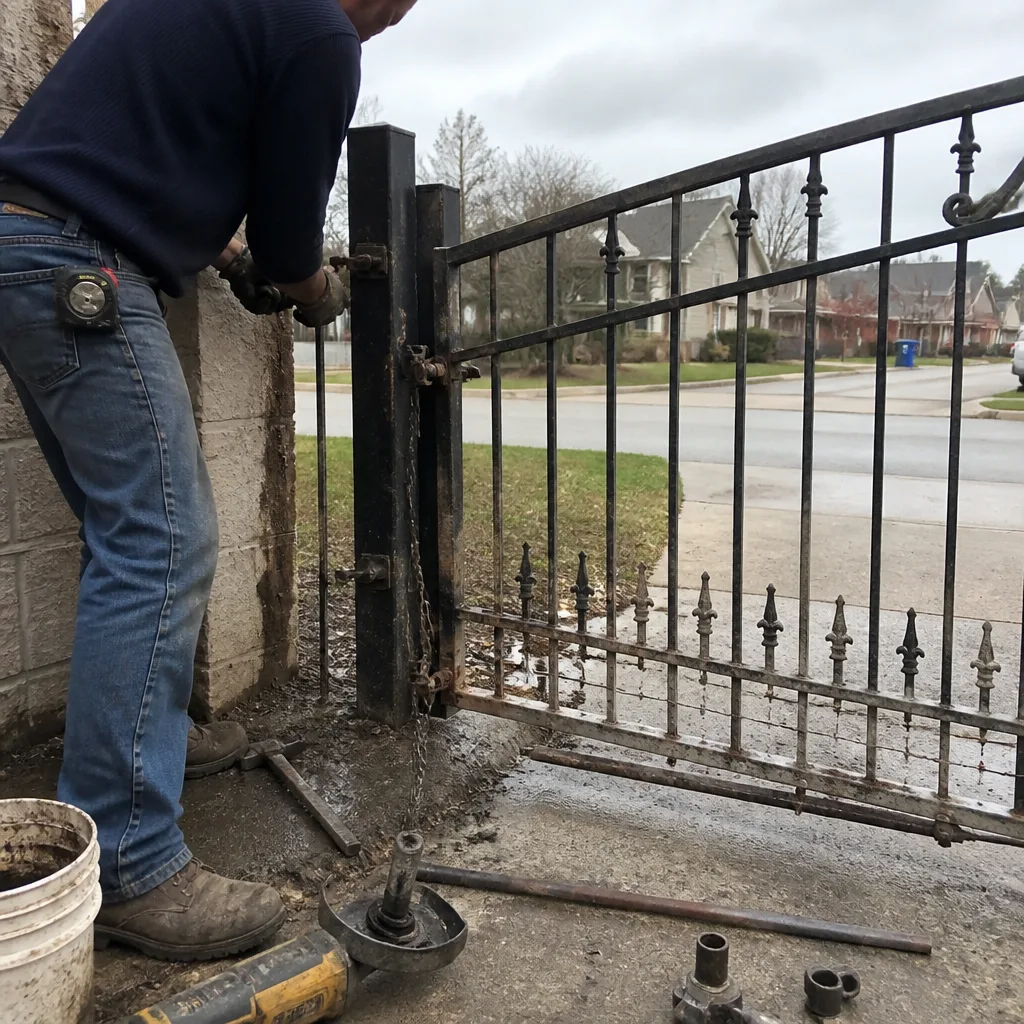 Before
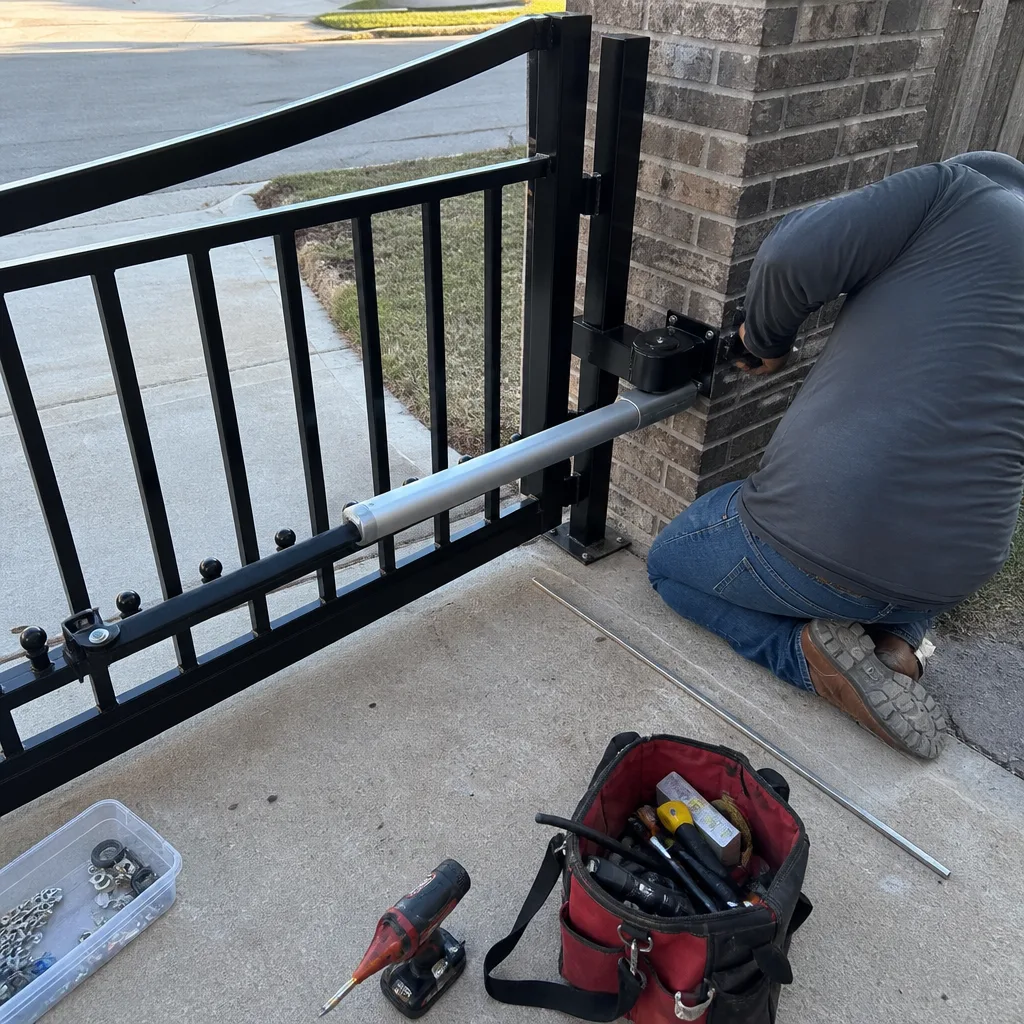 After
After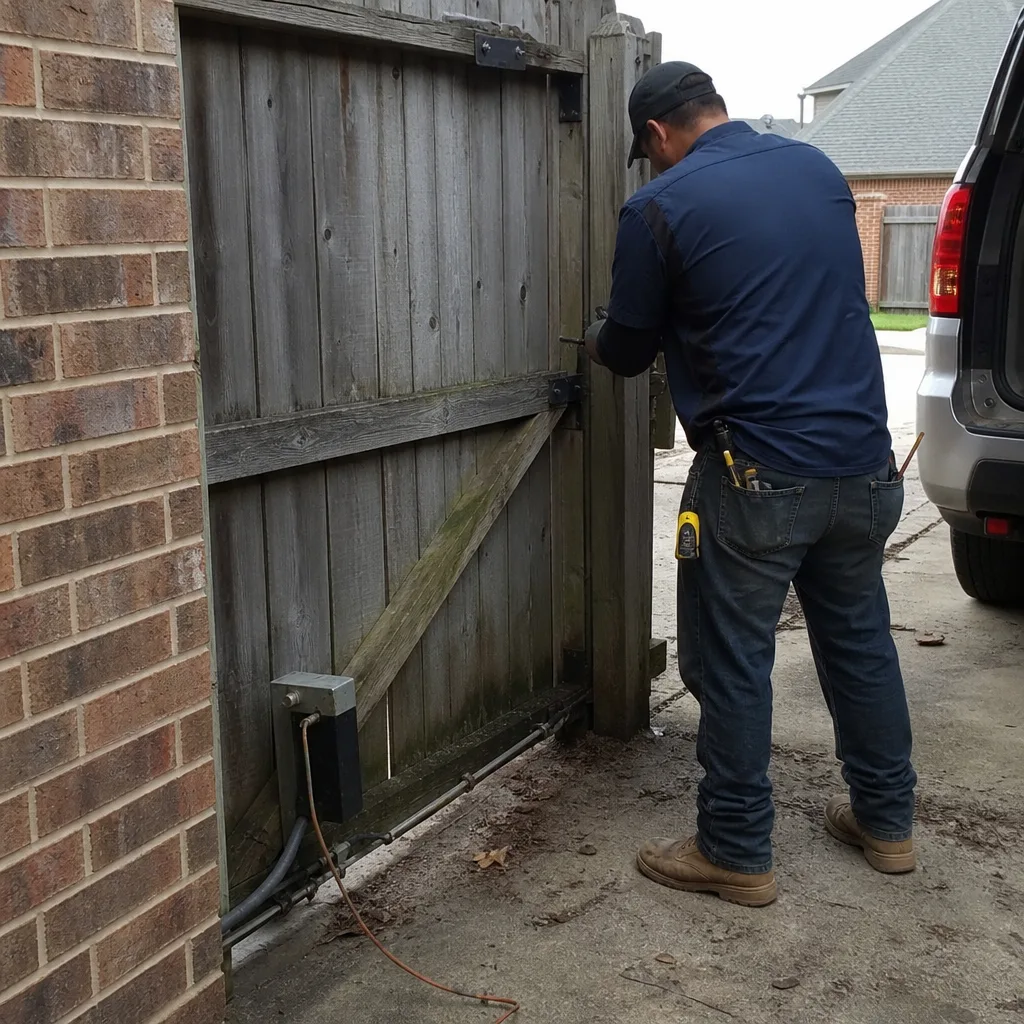 Before
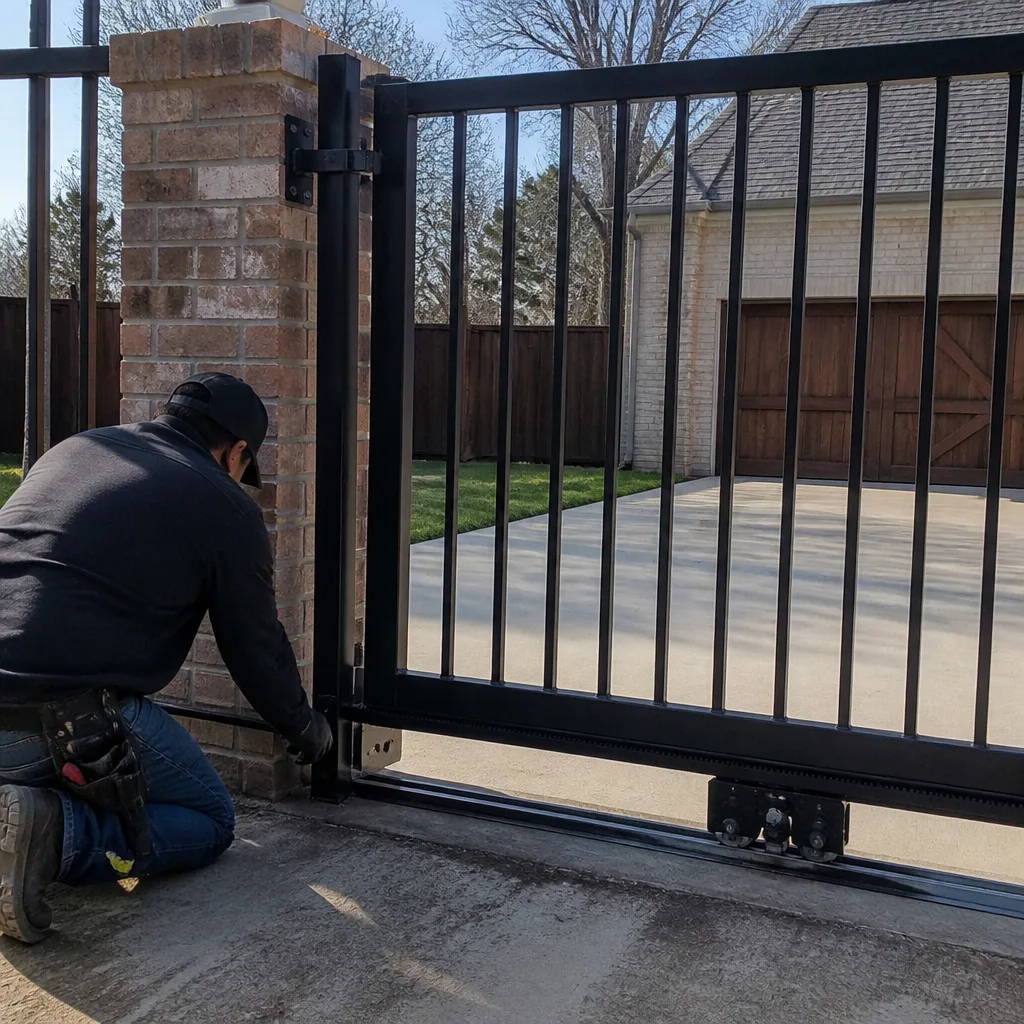 After
After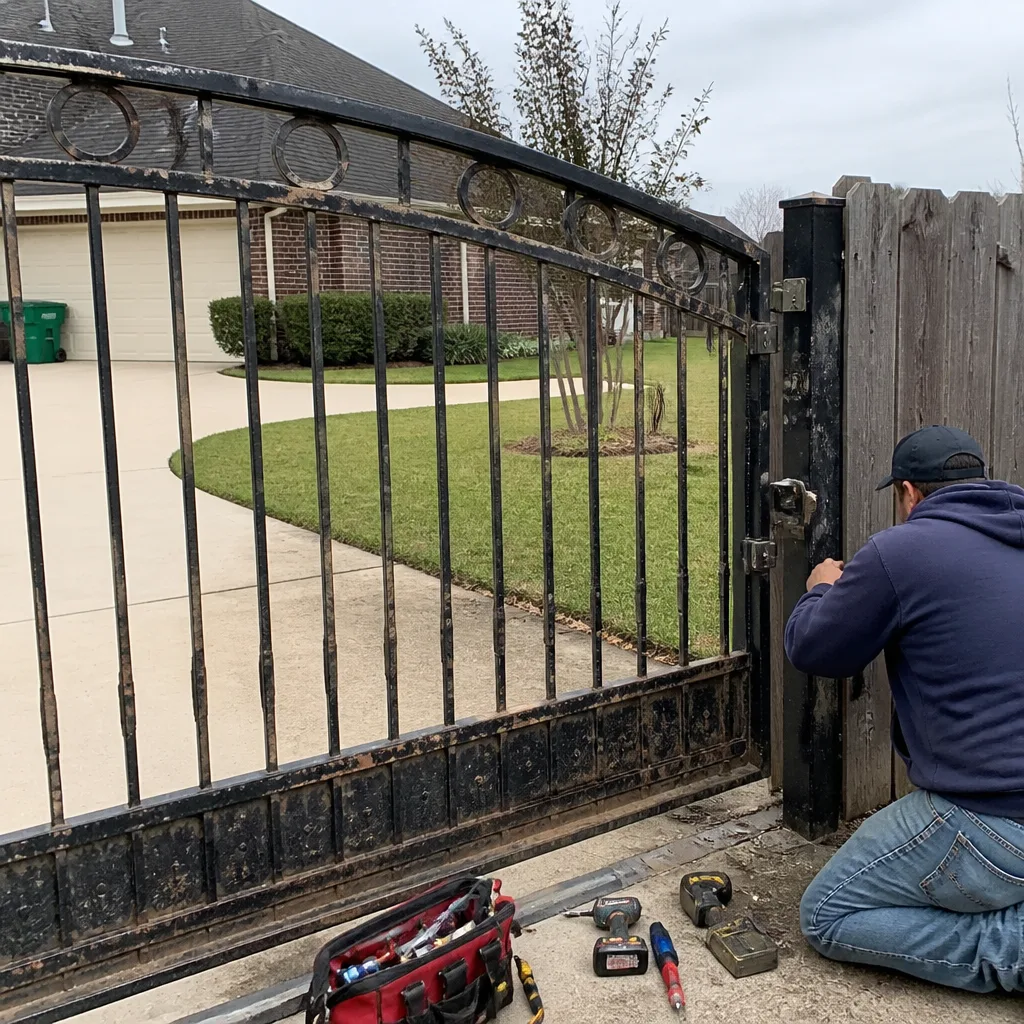 Before
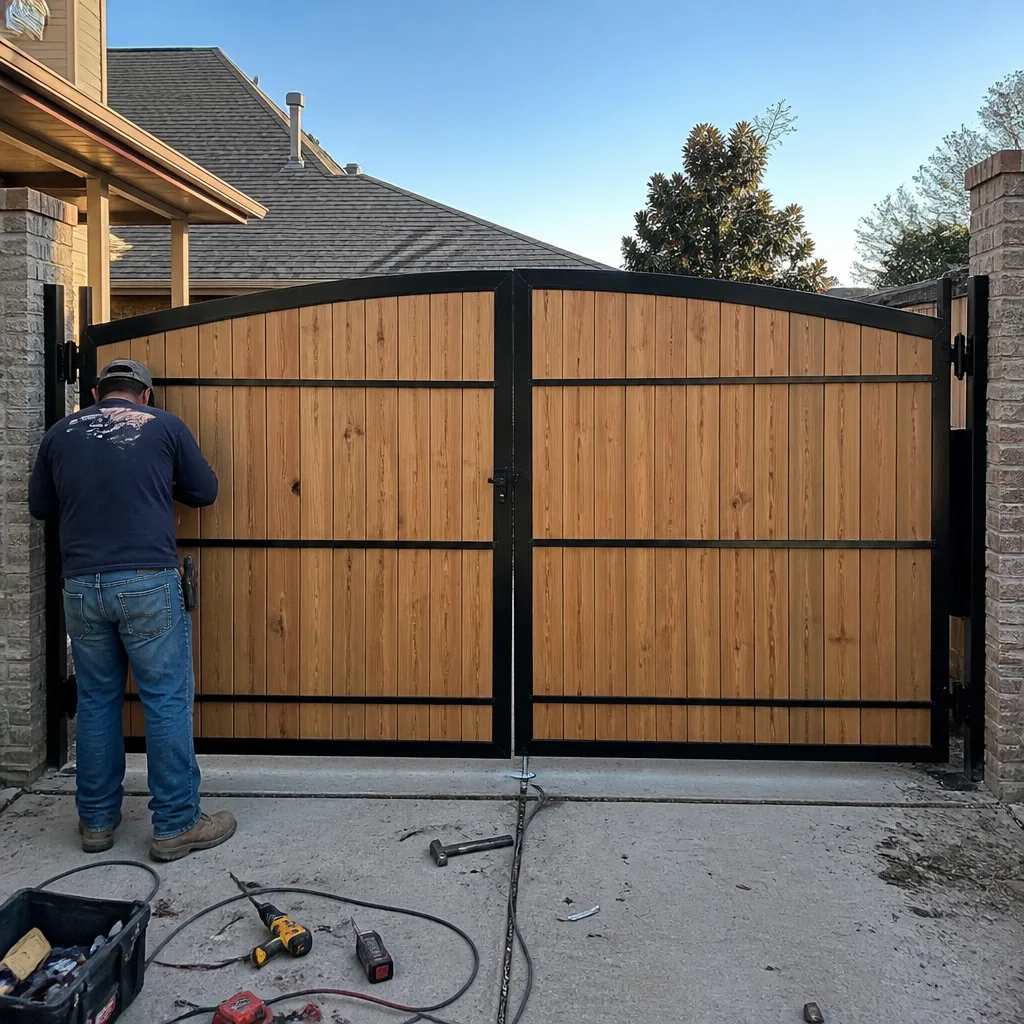 After
AfterThe Complete Guide to Gate Repair in Pearland
Here is a number most Pearland homeowners never hear: a gate that reverses mid-swing is not an operator problem roughly 60% of the time. It is a limit-switch reading that drifted because the post shifted, and replacing the operator leaves the drift intact. The homeowner pays for a new motor, the gate still reverses, and nobody wins. This guide maps every gate repair category to its actual root cause so you know what question to ask before a technician ever sets foot on your Pearland driveway. We will cover the three overlooked causes of gate failure in this region: soil movement, humidity-driven corrosion, and misread limit switches.
Vance Gate Repair Pearland home provides gate repair services throughout Pearland and the surrounding area.
Quick Answer
Gate repair in Pearland typically costs $145 to $900 depending on the component, with most common repairs like limit-switch resets, hinge replacements, and photo-eye realignment falling between $145 and $380. Full operator replacement on a swing gate runs higher, usually $680 to $1,900 installed depending on the motor brand and whether the arm bracket is intact. The most important step before any repair is identifying the root cause, because Pearland’s expansive clay soil and coastal humidity create failure patterns that look like motor problems but are actually structural issues. For a detailed look at what drives these costs, see our Gate Repair Cost Breakdown: The Pearland Homeowner’s Reference for 2026.
Table of Contents
- How Pearland’s Soil Movement Mimics Electrical Faults
- Humidity-Driven Corrosion: The Pearland Pattern
- Why Limit-Switch Calibration Is the Most Misdiagnosed Repair
- What Wears First, What Fails Second: A Component Map
- What to Have on File Before Any Repair Visit
- What Gate Repair Costs in Pearland
- Questions to Ask a Gate Technician Before They Start
- Common Mistakes to Avoid
- When to Call a Professional
- Frequently Asked Questions
BeforeAfterHow Pearland’s Soil Movement Mimics Electrical Faults
Pearland sits on a bed of expansive clay soil that swells when wet and contracts when dry. This movement does not happen in a dramatic, visible way. It happens in fractions of an inch per season. Over two or three years, that is enough to lean a gate post two or three degrees out of plumb. And a post out of plumb by just two degrees changes the geometry of the entire gate system.
Here is what happens next. The gate leaf, now slightly tilted, no longer meets the latch cleanly. The operator arm has to work harder on the last few inches of travel. The limit switch, which was set when the gate was plumb, now stops the gate either too early or too late. The homeowner notices the gate straining, hears a grinding noise, and assumes the motor is failing. In our experience across Pearland neighborhoods like Silverlake, Shadow Creek Ranch, and Green Tee Terrace, roughly one in three “motor failure” calls turns out to be a post that moved.
How do you distinguish soil movement from a genuine electrical fault before ordering parts? There are four quick checks a homeowner can do on their own, or you can read our DIY vs Professional Gate Repair: The Pearland Homeowner’s Decision Guide to decide which path fits your situation:
- Level the post. Place a carpenter’s level against the hinge post and the latch post. If either is off by more than a quarter bubble, soil movement is in play.
- Watch the gap. Open the gate halfway and look at the gap between the leaf and the post. A gap that widens toward the top indicates the post is leaning outward.
- Listen for strain. A motor struggling due to geometry makes a labored, drawn-out sound. A genuinely failing motor often makes an intermittent grinding or clicking sound.
- Check the base. Look for a visible gap between the post base and the surrounding concrete or soil. A finger-width gap means the post has already begun to move.
If the post has moved, the repair is a structural one: resetting the post or shimming the hinges to restore plumb geometry. If the post is stable, then the electrical system deserves first attention. Knowing this distinction before a technician arrives can save you from paying for a motor replacement that would not have solved the problem. For a deeper look at this specific issue, see our Gate Repair in Pearland page.
Humidity-Driven Corrosion: The Pearland Pattern
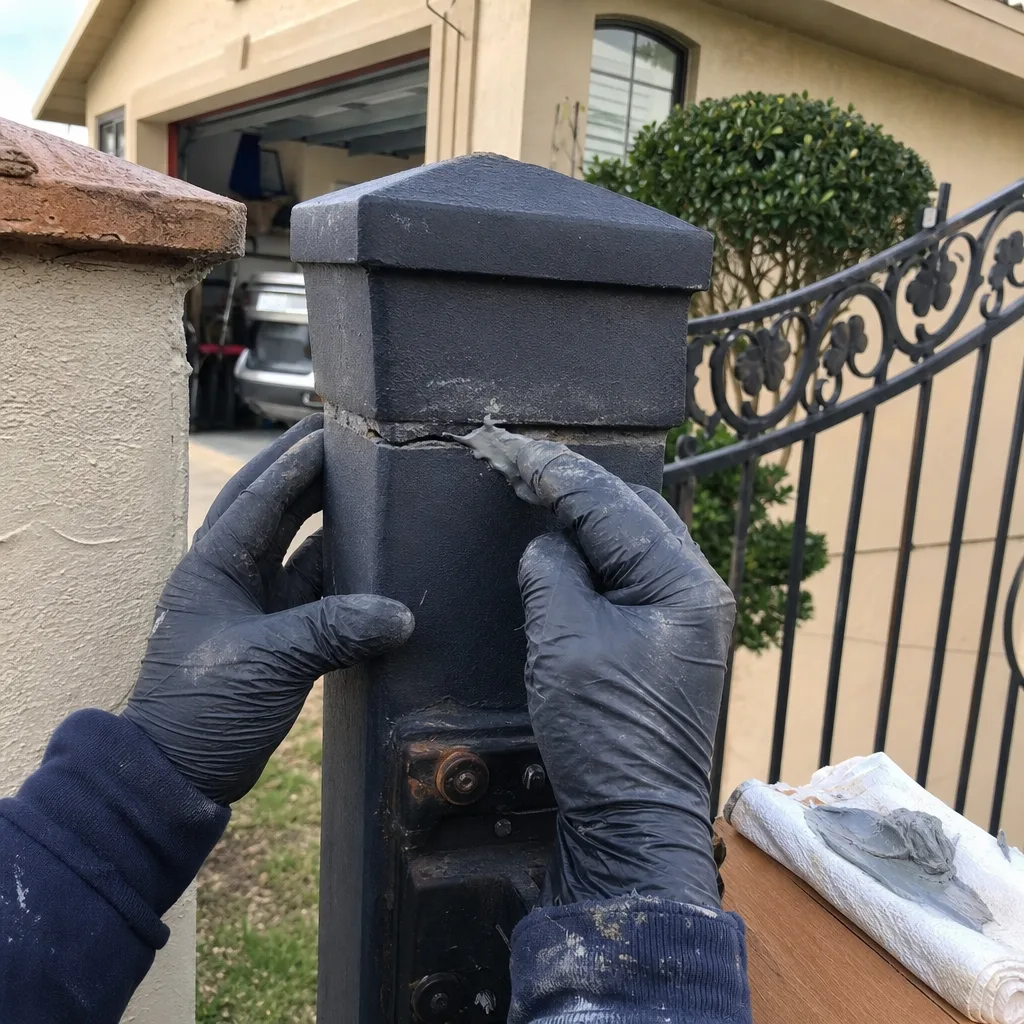
Pearland’s humidity averages above 70% for most of the year, and the coastal-adjacent air carries salt compounds that accelerate metal breakdown. This produces a specific corrosion pattern that differs from what you would see in, say, inland Texas or the desert southwest. In Pearland, hinge bolts rust from the inside out, weld seams develop pitting at the heat-affected zone, and powder-coated steel begins to bubble at the bottom edge first, where moisture sits the longest.
The most dangerous corrosion is not the visible rust on the surface. It is the internal rust in the hinge barrel that causes the gate leaf to sag gradually. A gate that drags on the ground or scrapes against the latch is often not a bent frame. It is a hinge pin that has lost its integrity due to years of moisture exposure.
Here is the sequence of what happens when corrosion goes unaddressed in a Pearland climate:
- Year one to three: Surface rust appears on bolt heads and bare metal edges. Cosmetic but worth treating.
- Year three to six: Hinge bolts begin to corrode internally. The gate starts to sag, and the latch resists.
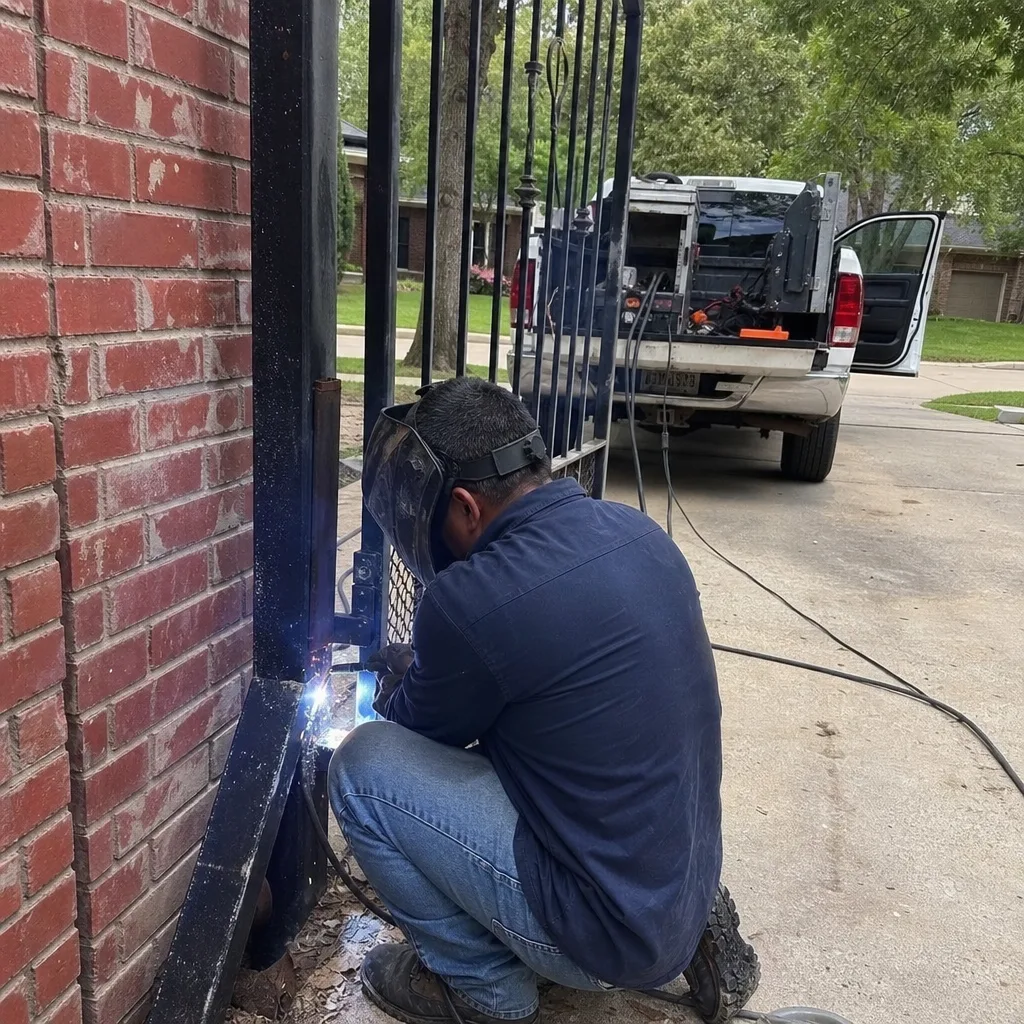
- Year six to ten: Weld seams develop hairline cracks at the stress points, particularly where the diagonal brace meets the top rail.
- Beyond ten years: The hinge weld itself can fail, causing the gate to drop or bind completely.
We see this progression regularly in older Pearland neighborhoods like Old Town Pearland and Southdown, where gates installed in the early 2000s are now entering the failure window. The fix is not always replacement. Many hinged gates can be saved with new bolts, rewelded seams, and a proper rust treatment, provided the corrosion has not reached the structural core. What matters is catching the pattern early, because once a weld fails completely, the repair becomes a fabrication job rather than a hardware swap.
Why Limit-Switch Calibration Is the Most Misdiagnosed Repair
The limit switch is the device that tells the operator where the gate should stop in both the open and closed positions. It is a simple mechanism. And it is the single most misdiagnosed component in residential automatic gates.
Here is what we know from repairing gates across Pearland over the past decade: when a gate reverses mid-swing, stops short of fully opening, or slams hard into the closed position, roughly 60% of the time the operator is functioning exactly as it was designed. The problem is that the limit switch is receiving bad position data, or the switch itself has drifted from its set point.
A specific example: a gate in Shadow Creek Ranch that would not close fully. The homeowner had already received two quotes for a full operator replacement. Our technician found that the close-limit switch was set 12 degrees past full travel, which meant the operator was cutting power early as a safety response. We reset it and photographed the new position. Total repair time: 45 minutes. Total cost: under $200. No operator replacement needed.
Limit-switch calibration issues can be caused by several factors:
- Post movement: As covered above, a shifted post changes the physical end-of-travel position, which throws off the calibrated switch.
- Temperature expansion: Metal gates expand and contract throughout the day. A limit switch set in the cool of the morning may be slightly off by mid-afternoon.
- Wear in the mechanical stop: Gates that slam open or closed put stress on the physical stops, which can drift over years.
- Power interruptions: A lightning strike or rolling outage can cause certain operators, particularly older Mighty Mule and some LiftMaster models, to lose calibration memory.
The takeaway: if your gate is behaving inconsistently, the fix may be a twenty-dollar recalibration, not a two-thousand-dollar replacement. Before any replacement part is ordered, ask the technician to show you the current limit-switch settings and explain what the correct settings should be. A technician who cannot answer that question should not be replacing your motor.
What Wears First, What Fails Second: A Component Map
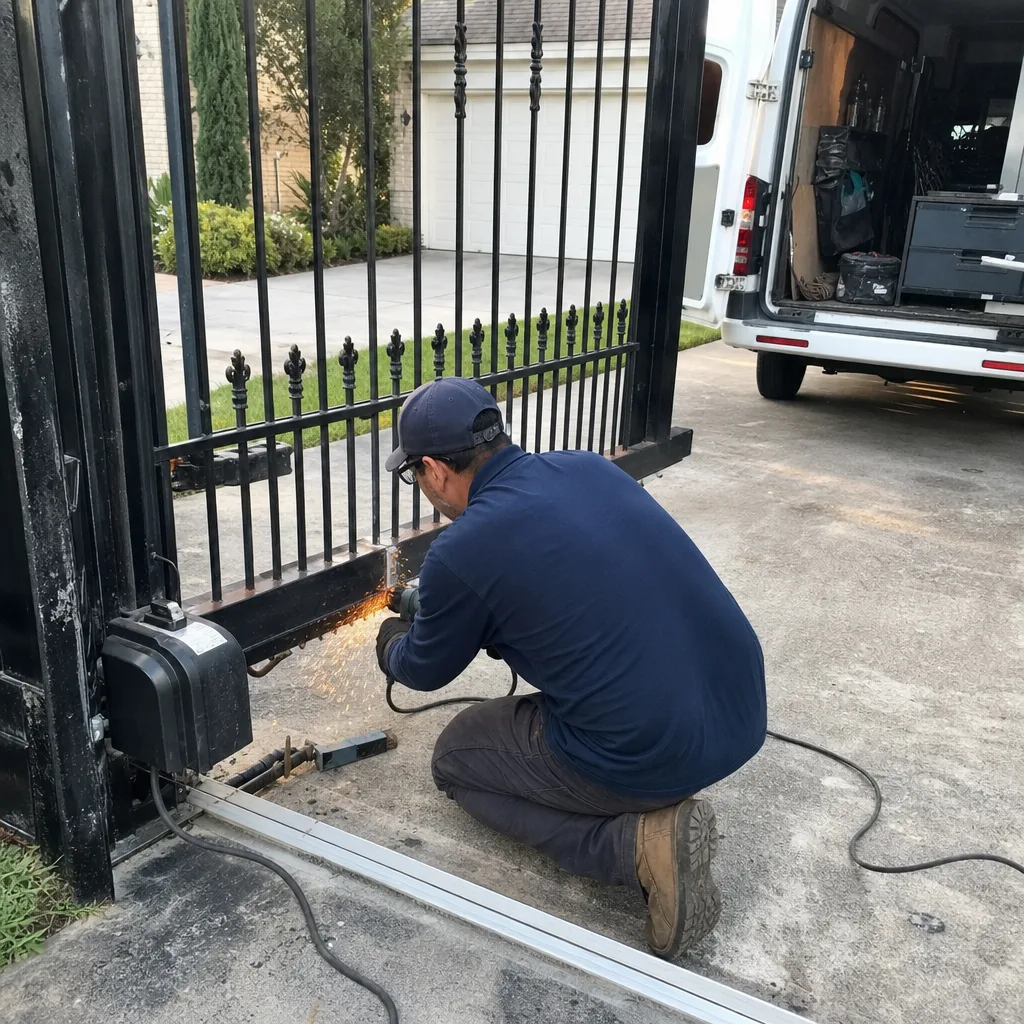
Every gate system has a predictable wear sequence. When a technician understands this sequence, the maintenance history of a gate reveals itself through what has already failed and what is about to fail. Here is the progression we see on most Pearland residential gates:
- Batteries and backup power. On Mighty Mule and Ghost Controls units, the 12-volt battery is the first component to degrade, usually within two to four years. Pearland heat accelerates this timeline.
- Photo-eyes and safety edges. The photo-eye (the infrared beam that stops the gate if something crosses the path) is the next common failure point. Pearland humidity causes corrosion on the exposed wiring connections.
- Hinge hardware and bushings. On swing gates, the lower hinge carries the most weight and wears fastest. On slide gates, the roller wheels and track wear first.
- Drive belts and chains. Short of an outright break, belts stretch and chains develop slack over thousands of cycles. This creates noisy operation before failure.
- Limit switches and sensors. As described in the previous section, these drift and misreport, but they rarely fail outright. Calibration is usually the fix, not replacement.
- Opener motor and gear assembly. This is often the last thing to actually fail. A well-maintained LiftMaster or FAAC operator in Pearland can run for a decade or more before the motor itself goes.
What does this sequence tell the technician? If we arrive at a gate and see fresh batteries but a destroyed hinge bushing, we know the previous repair addressed a symptom rather than the root cause. If the photo-eye has been recently replaced but the limit switch has never been calibrated, we know the gate has been band-aided rather than serviced. This is why documentation matters, which is the subject of the next section.
What to Have on File Before Any Repair Visit
Most Pearland homeowners start from zero when a gate technician arrives. No record of the operator brand. No record of the last service call. No wiring diagram. No photo of the setup. This means every new technician has to rediscover the system from scratch, and the homeowner pays for that discovery time.
Here is the documentation you should keep on file for your gate system:
- Brand and model of the operator. This is on a sticker on the motor itself. Take a photo. Store it on your phone.
- Year of installation. If you did not install the gate, check the home purchase documents or look for a date stamp on the operator housing.
- Last service record. What was done, when, and by whom. Get a written summary from the technician before they leave.
- Photo of the control board. This helps a new technician identify the board revision before ordering parts.
- Any wiring diagrams provided. If your gate is custom, the original installer may have left a diagram. Do not lose it.
- Remote and keypad instructions. If the gate has a BFT or FAAC keypad, know the model number.
Our company follows a documentation habit that originated in our commercial access-control background. Every visit includes a written record of what was found, what was adjusted, and what part number was installed, along with a photo log of the same. Under Clause 4 of our Haven Standard, this documentation is provided at no additional charge. We believe a homeowner should never have to pay twice to rediscover the same problem. For more guides & resources on maintaining your gate system, visit our blog.
For homeowners considering a new gate rather than a repair, see our Gate Installation in Pearland page for information on installation approaches and documentation standards.
What Gate Repair Costs in Pearland
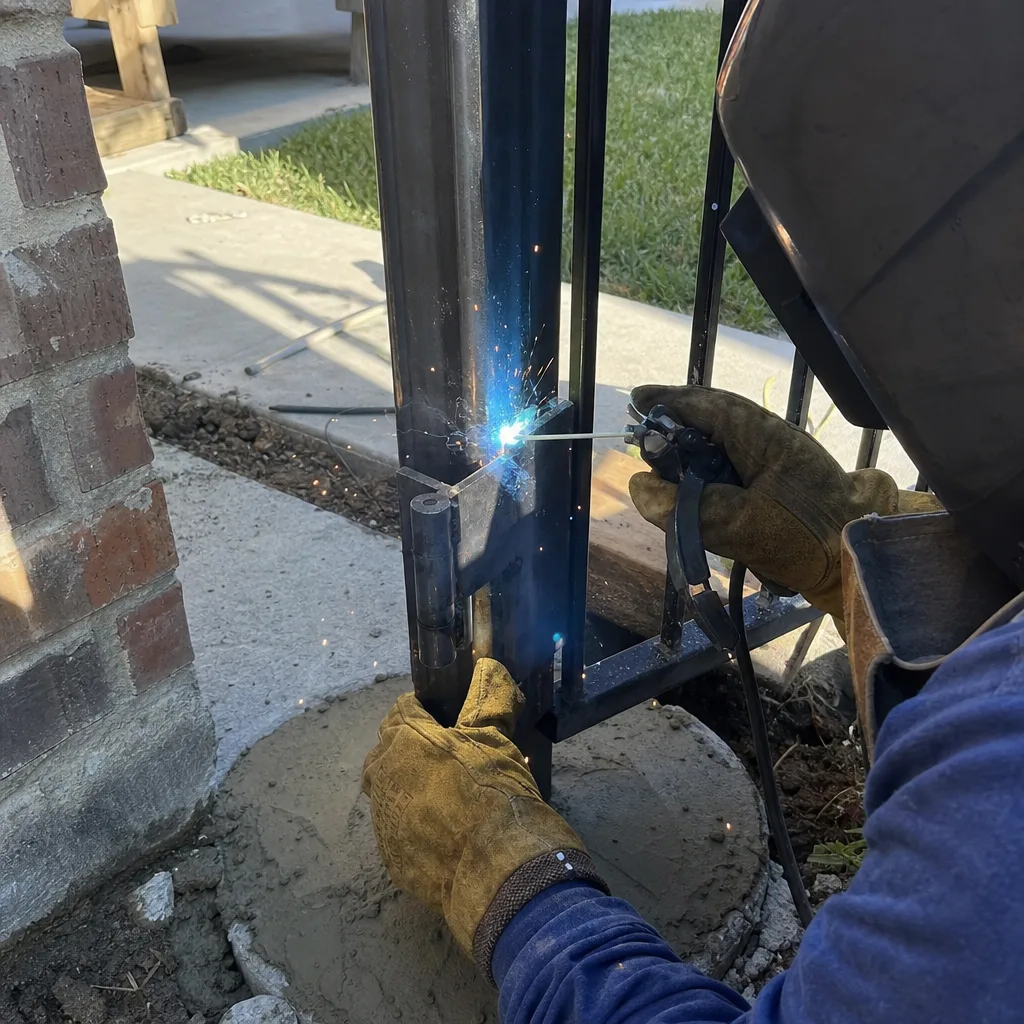
Gate repair pricing in Pearland varies by the component being addressed and the complexity of the system. Here is a breakdown of common repair categories and the ranges we quote on a regular basis. These prices reflect the Pearland market as of 2025 and include labor and standard parts.
| Repair Type | Typical Cost Range | Notes |
|---|---|---|
| Limit-switch recalibration | $95-$180 | Usually same-day. No parts required. |
| Photo-eye realignment or replacement | $120-$260 | Includes the sensor pair and aiming. |
| Hinge replacement (swing gate) | $180-$420 | Depends on gate weight and hinge type. |
| Roller or wheel replacement (slide gate) | $160-$380 | Includes track inspection. |
| Battery replacement | $65-$140 | Mighty Mule, Ghost Controls, and similar. |
| Operator replacement (swing gate) | $680-$1,900 | Depends on brand: LiftMaster, FAAC, BFT, or similar. |
| Weld repair (gate frame) | $150-$500 | Mobile welding or shop work, depending on access. |
| Full gate replacement (single swing) | $1,600-$4,500 | Includes posts, gate leaf, and hardware. |
Every price we quote is written down and handed to the homeowner before any work begins. No verbal estimate, no “we will see how it goes.” The written price is the price. If additional work is discovered during the repair, the additional work gets its own written approval before we proceed. This is Haven Standard Clause 1: have it in writing. It applies on every Pearland job, and we have never made an exception.
For operator-specific issues, our Gate Motor & Opener in Pearland page covers motor and opener repair in more detail.
Questions to Ask a Gate Technician Before They Start
The difference between a good gate repair experience and a frustrating one often comes down to the questions asked before the work begins. Here are the questions we think every Pearland homeowner should put to any technician who arrives to work on their gate:
- Will you give me the price in writing before you start? If the answer is no, or if the technician hesitates, consider that a signal. Written pricing before work starts should be standard practice, not a special request.
- What exactly did you find, and can you show me? A good technician will walk you through what is wrong and point it out. A vague answer is a red flag.
- What is the root cause of the failure? If the technician wants to replace an operator on a gate with a visibly tilted post, ask them to explain why the post tilt will not affect the new operator.
- What brands do you service? If the answer is “we only work on one brand,” be cautious. A good gate technician should be able to service the operator that is already on your property, whether it is a LiftMaster or a Mighty Mule from the home store.
- Will you leave me a written record of what was done? A photo log, a part number, a summary. If the answer is “you do not need that,” find someone else.
- Is this repair under warranty or promise? If the company has a workmanship guarantee, get it in writing. Our 365-Day Done Right Promise covers every completed repair for a full year, and we state it on the scope document before work begins.
These questions will not make you popular with a technician who prefers to work fast and leave. They will help you identify a technician who is willing to be accountable, which is exactly the kind of person you want touching a gate that protects your property and your family.
Common Mistakes to Avoid

- Replacing the operator without checking the post. A shifted post will defeat a new operator the same way it defeated the old one. Check the geometry first.
- Ignoring the photo-eye warning signal. If the photo-eye light blinks or the gate refuses to close and beeps, that is a diagnostic signal, not a random malfunction. Look up the blink code before calling for help.
- Lubricating without cleaning first. Spraying lubricant onto a dirty chain or hinge just creates a grinding paste. Clean the surface, then lubricate.
- Powering through a gate that is binding. If the gate is straining, continuing to operate it puts stress on every component in the system. Stop using it and get it inspected.
- Disconnecting safety features. Bypassing the photo-eye or safety edge to make the gate “just work” is dangerous. These devices exist to prevent injury. Never disable them.
- Hiring the cheapest quote without asking what is included. A low quote that does not include written documentation, part numbers, or a workmanship promise is not actually cheaper. It is just less accountable.
- Throwing away old components without documenting them. The old operator or hinge contains information about the system. Photograph it before it goes in the truck.
When to Call a Professional
Some gate repairs are straightforward. Others are not. Here are the scenarios where calling a professional is the right move. If your gate is sparking, smoking, or making a loud buzzing sound, stop using it and call someone. If the gate has come off its track or the leaf has dropped, do not try to lift it back into place, as a falling gate leaf weighs more than most people expect. If the operator is dead but the gate still swings freely by hand, the problem may be a tripped GFCI or a failed battery, which requires diagnostic tools to confirm. If you are not certain what is wrong, or if a previous repair did not hold, a professional inspection is worth the service fee. Vance Gate Repair Pearland offers free estimates in Pearland. Call (346) 253-3225 and a live person answers, any hour.
Frequently Asked Questions
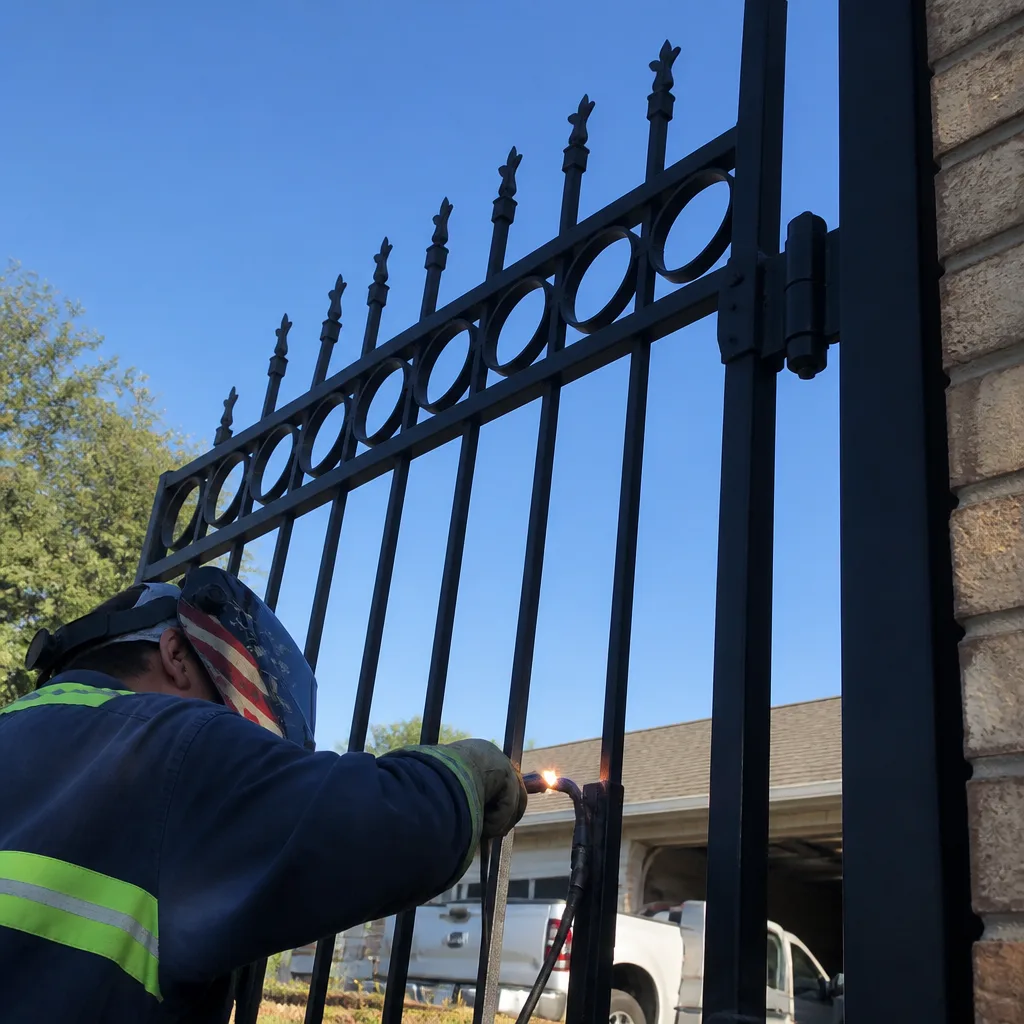
Most gate repairs in Pearland cost between $145 and $380 for common issues like limit-switch recalibration, photo-eye replacement, and hinge work. Full operator replacement runs $680 to $1,900 depending on the brand and the condition of the existing bracket and arm. Every repair we perform includes a written price before work begins, so you know exactly what the job will cost before we touch a tool.
In most cases, yes. We keep common parts like photo-eyes, batteries, limit switches, and hinge hardware stocked for the operators we service, including LiftMaster, FAAC, BFT, and Mighty Mule. If we diagnose the issue in the morning, we can often complete the repair the same afternoon. Call (346) 253-3225 and a live person will let you know what is possible today.
A gate that reverses mid-closing is usually detecting a false obstruction. The most common causes are a misaligned photo-eye, a dirty lens, or a limit switch that is set past full travel. Less often, the safety edge is worn and sending a constant fault. We check the photo-eye alignment and limit-switch settings before recommending any replacement part, because the fix is frequently a calibration rather than a component swap.
We service nine major gate-automation brands: LiftMaster, FAAC, BFT, Linear, Viking, Ghost Controls, DoorKing, Elite, and Mighty Mule. If your operator is from one of these manufacturers, we can work on it. We do not steer customers toward a replacement when a repair will do the job.
Place a level against the hinge post and the latch post. If either is off by more than a quarter bubble, the post has moved. A visible gap between the post base and the concrete, a widening gap at the top of the gate when it is half open, or a gate that suddenly drags on the ground are all signs of post movement. Pearland’s expansive clay soil is the underlying cause in most cases.
Know the brand and model of your operator, which is printed on the motor housing. Have the gate accessible. Be prepared to describe the problem in plain terms: when it started, what the gate does, and whether the behavior is consistent. The technician can confirm the rest with diagnostic tools on site.
The Bottom Line
Gate repair in Pearland is rarely about the motor. It is about the soil under the posts, the humidity in the air, and the calibration of the switches that tell the motor what to do. Understanding these three root causes puts you in a position to ask the right questions and avoid paying for a repair that does not fix the actual problem. Demand a written price before work starts. Ask for a record of what was found and what was changed. And when in doubt, call a company that will show you the evidence: (346) 253-3225.
Written by Adrian Vance, Owner at Vance Gate Repair Pearland, serving Pearland since 2014.