
Last updated September 20, 2026
Free on-site gate assessment - hinges, posts, and your LiftMaster or Nice gate operator checked before anything is quoted
The assessment is free and the quote is the invoice.
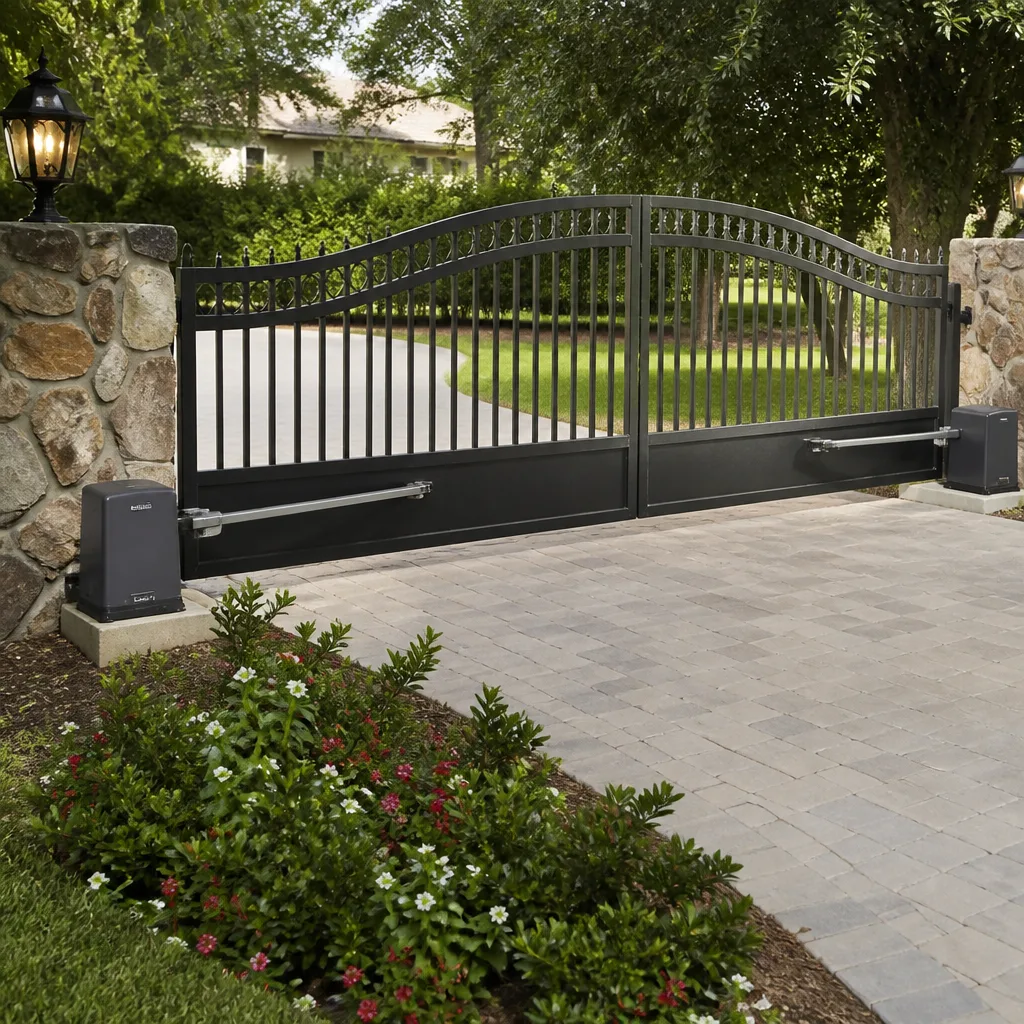
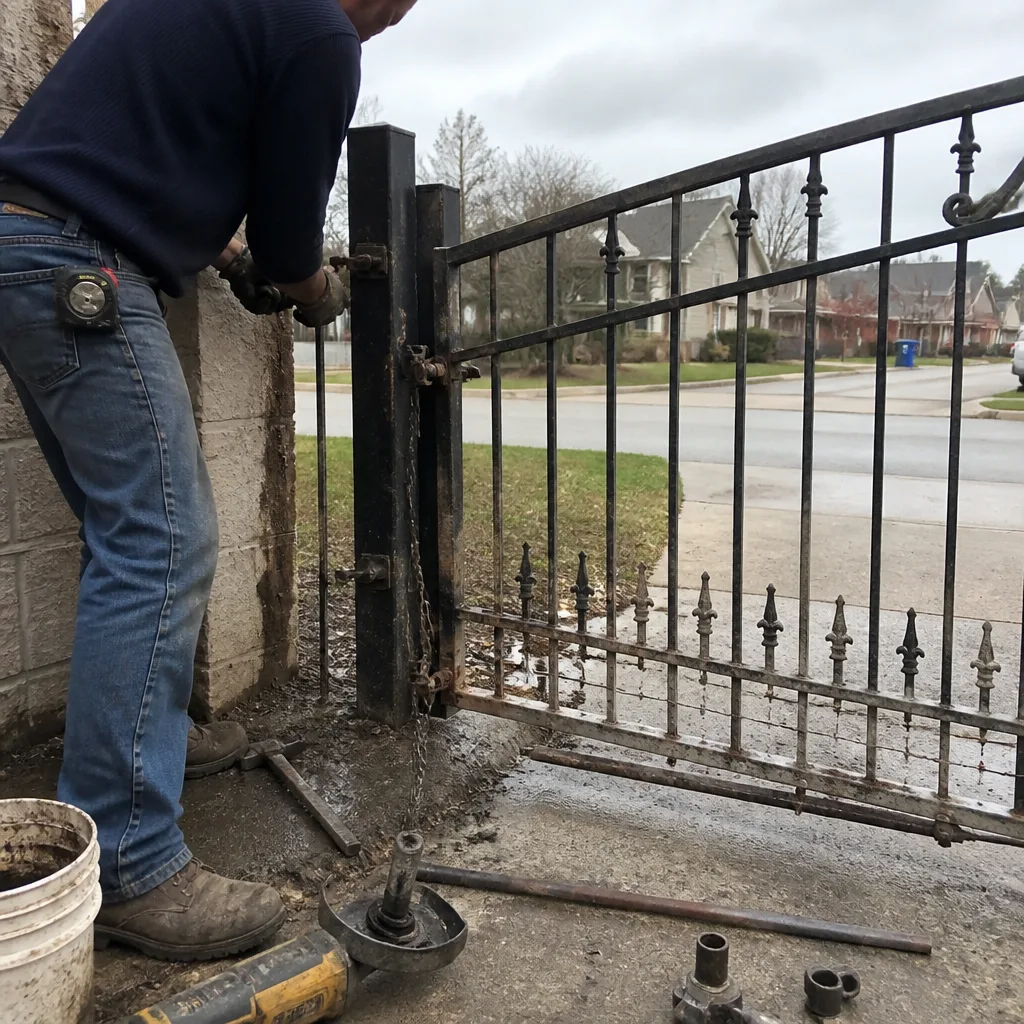 Before
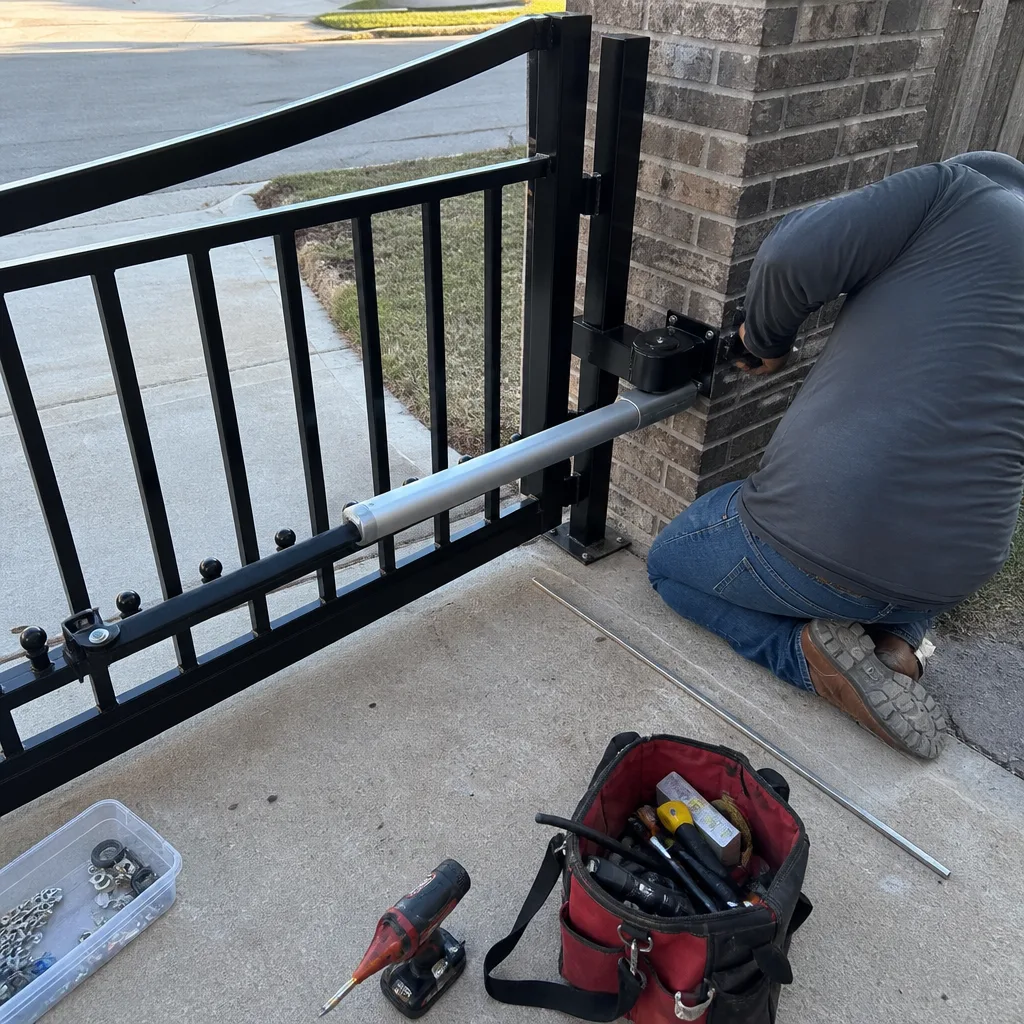 After
After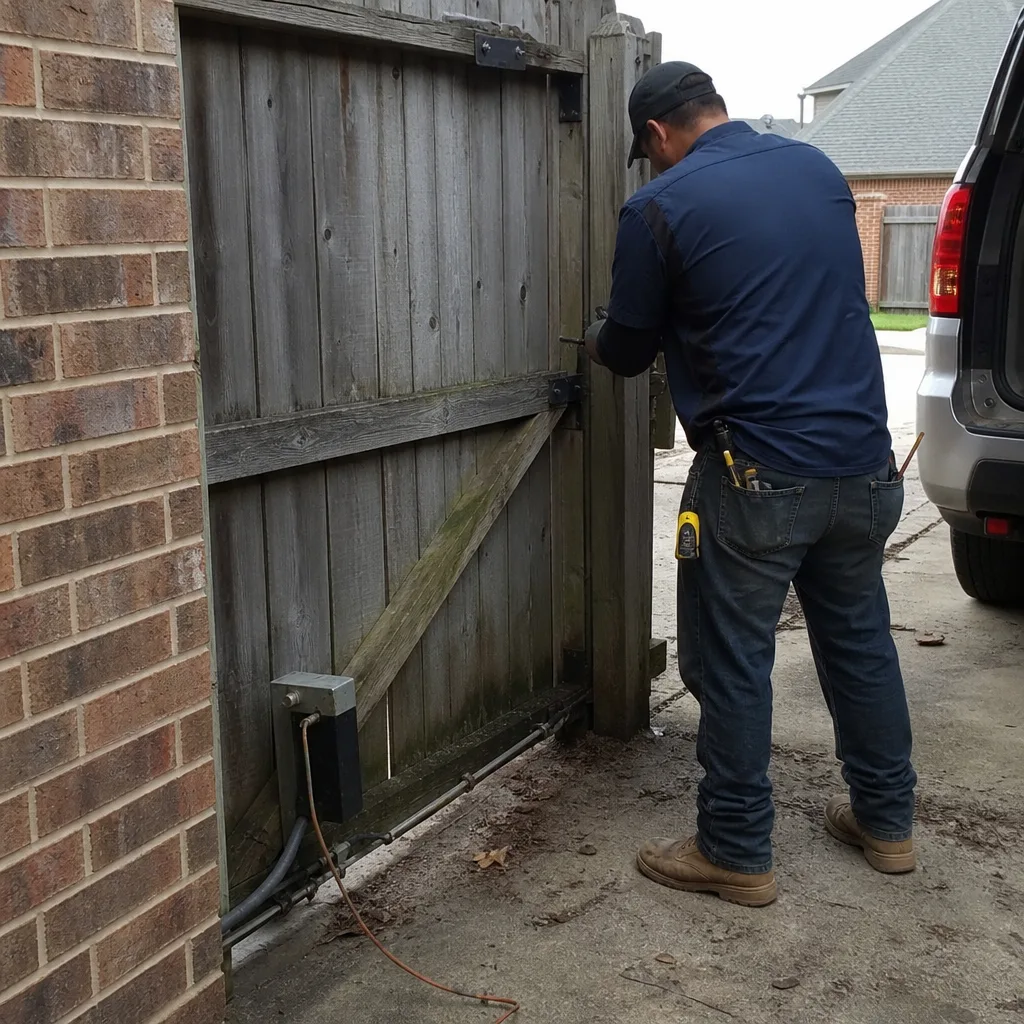 Before
 After
After Before
 After
AfterDIY vs Professional Gate Repair: The Pearland Homeowner’s Decision Guide
Replacing a gate operator is mechanically straightforward. A determined homeowner can do it in an afternoon with basic hand tools. The problem is that roughly 40% of the time, the operator wasn’t the failed component. Homeowners across Pearland replace motors, control boards, and remote receivers only to watch the same fault reappear two weeks later. This guide draws the line where it actually belongs: at the diagnostic step, not the technical difficulty step. By the time you finish reading, you’ll know which gate repairs make sense for a Saturday project and which ones will cost you more when the wrong component gets replaced first. For work that goes beyond DIY, see our Gate Repair services.
Quick Answer
DIY gate repair is genuinely appropriate for lubrication, minor track alignment, sensor cleaning, and battery replacement. Professional service becomes the cheaper option whenever the repair requires diagnostic equipment most Pearland homes don’t have: amp-draw meters, limit-switch calibration tools, and continuity testers. The expensive mistake isn’t a botched physical repair; it’s replacing the wrong part because the fault was misdiagnosed.
Table of Contents
- Repairs Where DIY Is Genuinely Appropriate
- The Diagnostic Gap: What You Can’t See Without the Right Equipment
- UL 325 and the Liability You Didn’t Know You Were Accepting
- The True Cost of a DIY Attempt That Leads to a Professional Visit
- How to Document Your Own Work So a Pro Isn’t Troubleshooting Your Troubleshooting
- Pearland-Specific Factors That Change the DIY Calculus
- Common Mistakes to Avoid
- When to Call a Professional
- Frequently Asked Questions
- The Bottom Line
BeforeAfterRepairs Where DIY Is Genuinely Appropriate
Not every gate problem needs a service truck. In our experience repairing gates throughout Pearland, roughly one in five callouts could have been handled by the homeowner with fifteen minutes and a can of lubricant. The distinction isn’t skill level; it’s whether the job involves adjustment or diagnosis. Adjustment tasks are safe to attempt. Diagnostic tasks are where the trouble starts. Here is what falls on the safe side of that line.
Lubrication of Hinges, Rollers, and Track Hardware
Slide gates and swing gates in Pearland develop squeaks and stiffness as Gulf Coast humidity combines with fine clay dust from the region’s soil. A dry hinge forces the operator to work harder, which shortens motor life and can trigger safety reversals. Use a white lithium grease on metal-to-metal contact points. Wipe the surface clean first, apply sparingly, and work the gate through a full cycle. If the noise persists after lubrication, the problem is mechanical wear, not dryness, and that is a different category of repair.
Photo-Eye Cleaning and Minor Realignment
A photo-eye (the infrared beam that stops the gate if something crosses the path) misaligned by even two inches will refuse the close command. Dust, pollen, lawn debris, and the occasional mud dauber nest are common culprits in Pearland yards. Cleaning the lens with a soft cloth costs nothing. Realigning the sensor so the indicator light stops blinking takes patience but little skill. What you cannot easily do without equipment is test whether the sensor is still emitting at the correct strength. A weak photo-eye can pass a visual check and still fail intermittently.
Battery Replacement in Backup Units and Remote Transmitters
Backup batteries in gate operators typically last two to three years in Pearland’s heat. If your gate works fine on household power but fails during an outage, the battery is the likely fault and swapping it is a five-minute job. Remote transmitter batteries follow the same pattern. If the gate responds from the keypad but not the remote, replace the remote battery before suspecting the receiver board.
Track Cleaning and Debris Removal
Slide gates accumulate leaves, mulch, pebbles, and acorns in the track. In Pearland, live oak pollen forms a paste with morning dew that hardens into a gritty residue. Clearing the track with a brush and checking for obstructions requires no specialized knowledge. What we caution against is using a pressure washer. Water forced into the track rollers or the motor housing introduces a corrosion risk that didn’t exist before you started.
The Diagnostic Gap: What You Can’t See Without the Right Equipment
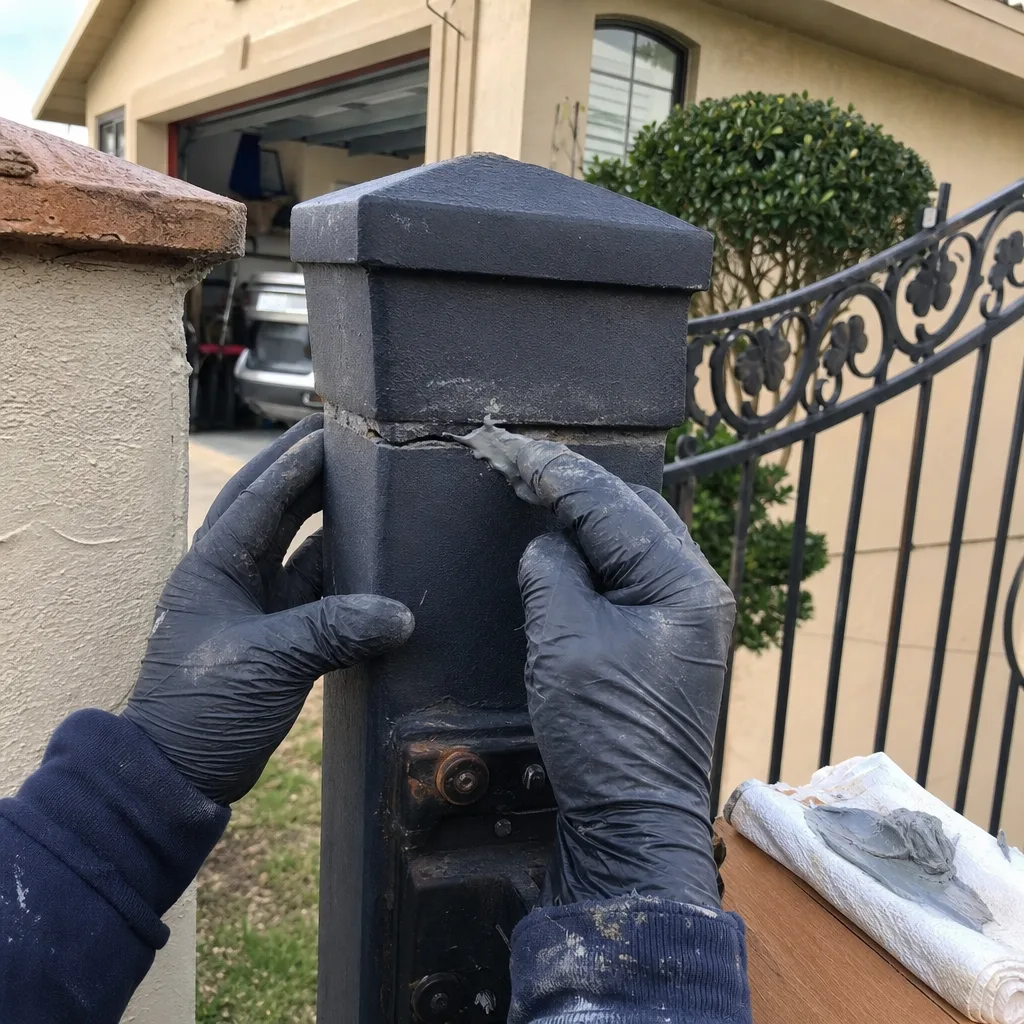
The reason 40% of DIY operator replacements don’t fix the gate is that the operator was never the failed part. The fault was upstream, downstream, or in the wiring between. This is where the line between DIY and professional gate repair in Pearland gets drawn. These three tests require equipment that most households don’t own, and the cost of the equipment exceeds the cost of a professional diagnostic visit.
Amp-Draw Testing
An operator that runs hot or trips its breaker is often drawing more current than the motor is rated for. The cause could be a failing motor, but it could also be a binding hinge, a dragging wheel, a bent track section, or a failing capacitor. An amp-draw meter clamped around the supply line tells us which it is. Without that reading, you’re guessing. If you replace a motor that was fine and the binding roller stays in place, the new motor inherits the same overload condition and fails prematurely. That’s the most common pattern we see when a homeowner has already replaced an operator: the replacement failed within a year because the original cause was never addressed.
Limit-Switch Calibration
A limit switch tells the operator where “open” and “closed” positions are. When a gate stops three inches short of the post, or reverses at the wrong point, or slams at the end of travel, the limit settings are the first thing we check. One of our Pearland customers had spent a full weekend replacing a control board that was responding correctly. The limit switch was set 12 degrees past travel, and the board was doing exactly what it was told. We reset it and photographed the new position. The board he’d bought sat in a box as a spare. Calibration tools with the precision needed for proper limit setting are not standard household items, and the procedures differ by brand. A LiftMaster limit adjustment is not the same as a DoorKing limit adjustment, and getting it wrong creates the same symptoms you were trying to fix.
Wiring Continuity Checks
Gate wiring runs underground in conduit, exposed to Pearland’s expansive clay soils that shift with every wet-dry cycle. A wire that shows continuity today can fail tomorrow as the soil moves and pulls at a splice. Continuity testers cost less than $40 and tell you whether a circuit is complete, but they don’t tell you whether the insulation is compromised, whether the wire gauge is appropriate for the run, or whether a ground fault is sending current where it shouldn’t go. Professional diagnostic equipment tests for all of those. What we see with DIY wiring repairs is a spliced connection that works for three weeks, then fails after a heavy rain when the Gulf humidity finds the weak point.
UL 325 and the Liability You Didn’t Know You Were Accepting
Every automatic gate in Pearland falls under UL 325, the federal safety standard for entrapment protection. This isn’t a building code preference; it’s a legal requirement. When you work on the entrapment protection components of your gate (photo-eyes, edge sensors, force settings, the control board that governs them), you are accepting legal responsibility for the gate meeting that standard after your repair.
The UL 325 standard requires two independent means of entrapment protection on every automatic gate. Typically that means a photo-eye pair and a reversing edge, or a photo-eye pair and an inherent force-limiting system that reverses the gate within specified parameters. Force limits are not set by feel. They’re set by measuring the actual force applied at the leading edge and comparing it to the UL 325 thresholds. Getting this wrong doesn’t just make your gate behave unpredictably. If a child or pet is entrapped and injured, and the gate’s force settings are discovered to be outside the standard, the person who last adjusted those settings bears the liability. That’s not a hypothetical. Homeowners’ insurance policies generally do not cover liability arising from improperly maintained entrapment protection on a gate the homeowner repaired themselves.
This is the strongest argument for professional involvement on any repair that touches the safety system. A Vance Gate Repair technician re-tests the full travel after every safety-system adjustment and photographs the final settings. The documented record exists specifically so that if anything is ever questioned, there is a written and photographic trail showing the gate was left compliant. That’s not something a homeowner can reconstruct after the fact.
The True Cost of a DIY Attempt That Leads to a Professional Visit
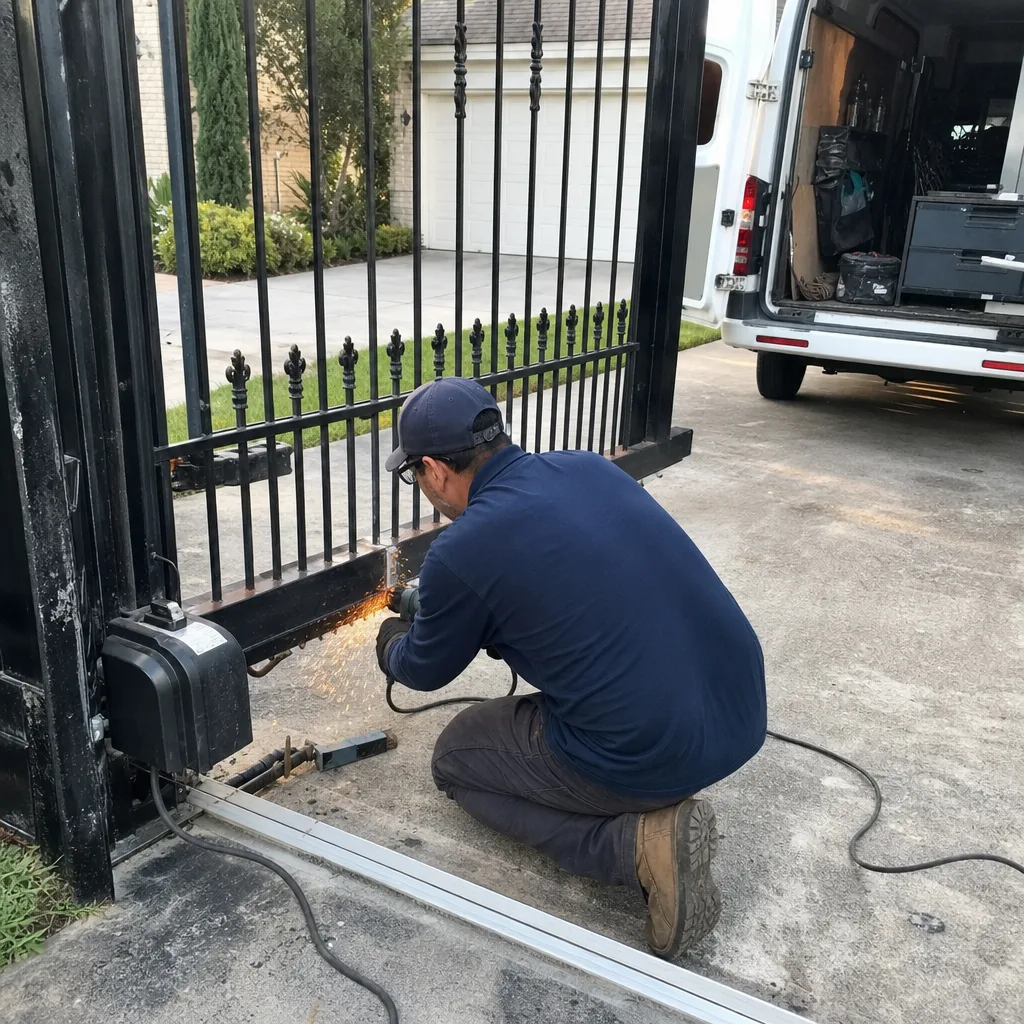
The honest math of DIY gate repair in Pearland includes three line items most homeowners don’t calculate before they start: parts purchased that didn’t fix the problem, hours spent that could have gone elsewhere, and diagnostic complexity added by an incomplete or incorrect repair. Here’s what the actual numbers look like based on common scenarios we’ve documented.
Scenario One: The Operator Replacement That Wasn’t
- DIY parts cost: $400 to $900 for a new operator, depending on brand (a LiftMaster or Mighty Mule residential operator typically falls in this range)
- DIY time cost: 4 to 8 hours for removal, mounting, wiring, and programming
- Professional repair afterward: $180 to $340 for the component that was actually failed, plus an additional diagnostic charge if significant troubleshooting is required
- Total when the wrong part was replaced: $580 to $1,240 plus a weekend lost
- Total if diagnosed correctly first: $180 to $340 and the gate works the same day
Scenario Two: The Sensor Misalignment That Escalated
- DIY parts cost: $50 to $150 for a replacement photo-eye kit
- DIY time cost: 2 to 4 hours including troubleshooting
- Professional repair afterward: $120 to $200 for correct alignment or for diagnosing the wiring fault that was the actual cause
- Total when the wrong part was replaced: $170 to $350
- Total if diagnosed correctly first: $120 to $200
The pattern is consistent. The parts cost is rarely the expensive part. The expensive part is the time spent installing a part that wasn’t the failure, and the compounding effect of a second repair built on top of the first one. Every incomplete or incorrect repair changes the diagnostic picture. The technician isn’t just finding the original fault; he’s also verifying that the new parts are compatible, correctly installed, and not creating new symptoms. That added complexity is real and billable.
How to Document Your Own Work So a Pro Isn’t Troubleshooting Your Troubleshooting
If you do attempt a DIY gate repair in Pearland and it doesn’t resolve the issue, the single most valuable thing you can leave behind is a clear record of what you did. We don’t say this to discourage DIY work. We say it because the difference between a $180 repair and a $400 repair is often whether the technician can see what happened before he arrived. Here’s a documentation method that mirrors what we leave on every professional job.
- Before you touch anything, photograph the existing condition. Take pictures of the operator, the control board (before you remove the cover), the wiring terminations, the limit switch positions, and the gate in both open and closed states. These photos become the baseline.
- Write down the exact symptom you’re trying to fix. Not “gate doesn’t work.” Write “gate opens fully but reverses after closing approximately 2 feet, photo-eye light blinks twice.” The specificity tells the next person what behavior to look for.
- Record the exact part numbers you replace. The model of the operator, the part number on the board, the serial number if visible. Write down what you removed and what you installed in its place.
- Photograph every connection after you’ve made it. Before you reassemble the housing, take clear photos of the new wiring, the new component, and any adjustments you made. If the system worked before you opened it, these photos show what you changed.
- Keep notes on anything you couldn’t complete. If you started a wiring repair and ran out of daylight, if a connector wouldn’t seat properly, if you weren’t sure about a setting, write that down. “I wasn’t sure about the force setting so I left it where it was” is exactly the information a technician needs to prioritize his checks.
- Leave the area clean and tell the next person what you removed. If you unplugged something, say so. If you bypassed a sensor temporarily, say so. A hidden bypass is dangerous and expensive to discover.
This documentation habit is the difference between a technician starting from zero and a technician starting from your notes. Under The Haven Standard, we leave this same record on every job we complete: photographed findings, written adjustments, part numbers installed. When a homeowner hands us the same quality of documentation on their DIY attempt, the diagnostic process is meaningfully faster and the bill reflects that.
Pearland-Specific Factors That Change the DIY Calculus
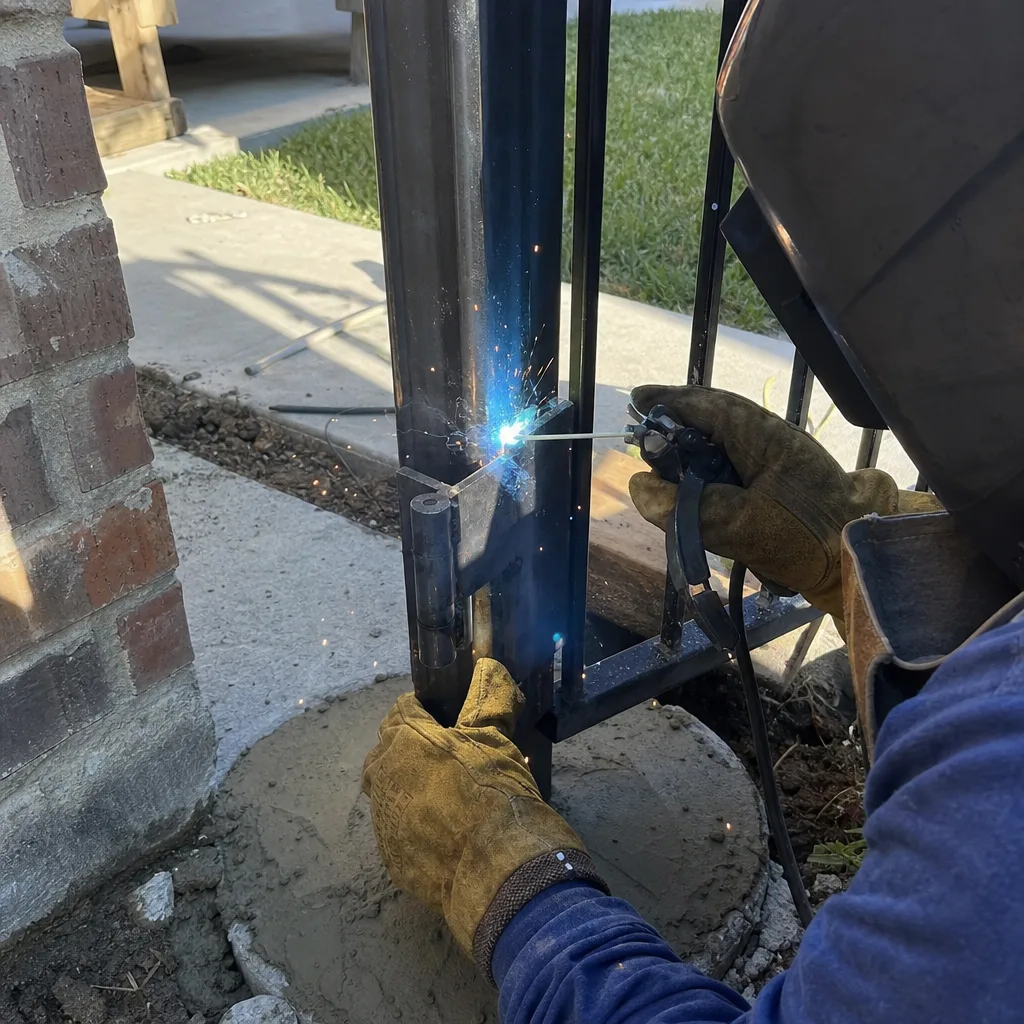
Pearland’s climate and soil create gate failure patterns that differ from what homeowners in other parts of Texas experience. Understanding these local factors helps you recognize when a symptom is routine versus when it signals something the environment is doing to your gate.
Expansive Clay Soil and Gate Post Movement
Pearland sits on the Gulf Coast Prairie with soils rich in expansive clay, particularly in neighborhoods east of 288 toward the Friendswood boundary. These soils shrink during dry spells and swell after heavy rain, which means gate posts move. Not visibly, usually, but enough to change the geometry of the gate. A gate that latched fine in October and suddenly binds in March isn’t malfunctioning; the post shifted. This is common enough in Pearland that we check post plumbness on nearly every swing-gate service call. It’s also a repair that a homeowner cannot fix with a wrench. Post stabilization is a two-person job that typically requires excavating around the post, resetting it in concrete, and allowing proper cure time while the gate is temporarily removed or blocked.
Gulf Coast Humidity and Control Board Corrosion
Control boards fail faster in Pearland than in dry climates. The combination of high humidity, occasional salt-laden air pushed inland by tropical systems, and condensation cycles inside the operator housing takes a measurable toll on circuit boards and connectors. We see oxidation on control board contacts in Pearland gates that are only three or four years old. This matters for DIY diagnostics because a board that looks fine on visual inspection may have corrosion invisible to the naked eye. A continuity test catches some of it. A trained technician with magnification and experience catches more. And sometimes the honest answer is that the board is too far gone to reliably repair, which means replacement rather than continued troubleshooting.
Heavy Rain and Wire Run Failures
Pearland averages 50-plus inches of rain annually, and the intensity matters more than the total. A five-inch deluge over a few hours saturates the ground and finds every compromised conduit splice in the system. We see a spike in service calls after major rain events, and the cause is almost always the same: water intrusion at a splice or junction box that was dry for months. If your gate fails after heavy rain and recovers after things dry out, that’s the diagnostic signature of a wiring issue, not an operator issue. This is a diagnostic finding, not guesswork, and it’s one of the most common misdiagnoses we correct. A homeowner who replaces an operator after a storm was likely repairing a symptom that lived underground.
Neighborhood Considerations
Pearland gate installations vary by subdivision. Silverlake and Shadow Creek Ranch tend toward ornamental iron swing gates with heavy operators. Areas along Broadway and older sections of town feature more slide gates and chain-link with operator conversions. The gate type and installation age change what typically fails and whether DIY parts are even available at big-box retailers. Some of the common operator brands in Pearland gates, including DoorKing and Elite units, are sold through dealer channels, which means their replacement parts aren’t stocked at home improvement stores. When the part you need isn’t available locally, and the manufacturer’s documentation expects professional-grade tools, the DIY attempt stalls before it starts.
Common Mistakes to Avoid
- Replacing the operator before testing the power supply. A dead operator often has live power at the outlet and a tripped GFCI or a failed transformer upstream. Test the supply before you order a $500 part. The simplest checks come first.
- Bypassing the photo-eye to “get the gate working.” Disabling entrapment protection violates UL 325 and leaves you legally exposed if someone is injured. It also masks the real fault, which is usually alignment or wiring, and the gate will fail again.
- Using automotive grease on gate hardware. Car grease is formulated for enclosed, high-heat environments. On gate rollers and hinges, it collects Pearland dust and pollen and turns into an abrasive paste that accelerates wear. Use white lithium grease or a dry lubricant designed for outdoor hardware.
- Setting force limits by “making it stronger.” Increasing the operator’s force setting until the gate overcomes an obstruction is how fingers get broken and motors burn out. Force settings have legal maximums under UL 325, and exceeding them transfers liability to the person who made the adjustment.
- Ignoring the gate hardware while replacing electronics. A new control board won’t compensate for worn rollers, a bent track, or sagging hinges. The mechanical loads are still there, and the new electronics will be asked to manage them. You haven’t fixed the gate; you’ve reset the clock on the same failure.
- Attempting spring or cable work on a heavy iron gate. Counterbalance springs and tension cables on ornamental iron gates are under load even when the gate is stationary. Releasing that load without the proper tools and training causes serious injury. This is the one category where we strongly recommend no DIY attempt whatsoever, regardless of skill level.
- Not documenting what you did before calling for help. Every Pearland homeowner who replaces a part without recording the original symptom, the original part number, and the original wiring configuration adds diagnostic time to the professional visit that follows. The bill reflects that time.
When to Call a Professional

Call a professional when the repair requires diagnostic testing you can’t perform, touches entrapment protection components, involves springs or cables under tension, or follows a heavy rain event. Call a professional when you’ve already replaced a part and the same symptom returned; the second diagnosis is always more complex than the first would have been. Call a professional when the gate is a large ornamental iron unit, post movement is suspected, or the operator was installed more than a decade ago and you don’t know what circuit board is actually inside. If you’re uncertain which category your gate falls into, Vance Gate Repair Pearland offers free estimates in Pearland, and a written price is provided before any work starts. Call (346) 253-3225 and describe what you’re seeing; a live person answers at any hour.
Frequently Asked Questions
Most residential gate repairs in Pearland run between $150 and $450 depending on the component, the brand, and the diagnostic time required. Simple fixes like photo-eye realignment or limit-switch adjustment sit at the low end. Control board replacement on a LiftMaster or DoorKing operator typically lands in the $250 to $500 range parts included. Full operator replacement runs $600 to $1,200 installed. Every job we do includes a written price before any work starts, so there is no open-ended invoice. Call (346) 253-3225 for an exact quote; estimates are free, and you’ll get the price on paper before you commit to anything.
In most cases, yes. A live person answers our phone 24 hours a day, seven days a week, and same-day dispatch is available for gate failures that leave the property unsecured. If the gate is stuck open and you need it closed tonight, tell the person on the phone exactly that; scheduling priority goes to security failures, not cosmetic adjustments. Call us at (346) 253-3225 and describe the symptom. Our Gate Repair in Pearland service covers slide gates, swing gates, and every configured operator on the gate, and we’ll tell you over the phone whether it sounds like a quick fix or a full replacement before we ever roll a truck.
Never attempt spring or cable work on an automatic gate. Counterbalance springs and tension cables carry stored energy even when the gate is stationary, and a released spring can cause life-threatening injury. Never adjust or bypass entrapment protection devices (photo-eyes, edge sensors, force settings) without the equipment to re-test compliance with UL 325. And never attempt post resetting or major structural welding; these require equipment and skills that go beyond any reasonable homeowner tool set. The labor and expertise for these tasks start where DIY capability reasonably ends. Let our Gate Installation in Pearland team handle structural and safety-critical work.
Expect 7 to 12 years from a quality residential operator in Pearland, with the lower end applying to coastal-adjacent areas with higher humidity and salt intrusion. Control boards typically fail before motors, especially in units where the housing gasket has degraded and allowed condensation to cycle through. Regular inspection of the housing seal and the desiccant pack (if your operator uses one) can extend board life. Most Pearland gate operator failures we see are not the motor; they’re the board or the wiring. If your operator is approaching a decade, a diagnostic check is cheaper than waiting for the failure. Our Gate Motor & Opener in Pearland service covers all major brands, including LiftMaster, Mighty Mule, DoorKing, and Elite.
Start by confirming whether the gate has power at the outlet; a tripped GFCI or a switched breaker is the single most common non-repair “repair” we see in Pearland. Then check the photo-eye alignment; if the indicator light is blinking, something is blocking the beam or the alignment is off. If you have a backup battery, know its age; batteries older than three years in our climate are suspect. Write down exactly what the gate does and doesn’t do before you call. That ten-minute list saves diagnostic time on site, and it makes the phone call itself more productive. Then call (346) 253-3225; you’ll speak to a person, not a menu, and we’ll help you decide whether it’s worth a service visit.
We service nine major gate-automation brands including LiftMaster, DoorKing, Elite, Mighty Mule, FAAC, BFT, Linear, Viking, and Ghost Controls. We don’t steer Pearland homeowners toward replacing a repairable operator just because we have a preferred brand. The brand on your gate matters for diagnostic procedures and part sourcing, but it doesn’t change our approach: written price before work starts, documented photo record of every adjustment, and the 365-Day Done Right Promise on completed work. If you already have a written estimate from another company, bring it in; we’ll review it at no cost and give you a second opinion. For more guides & resources on gate care and repair decisions, visit our blog.
The Bottom Line
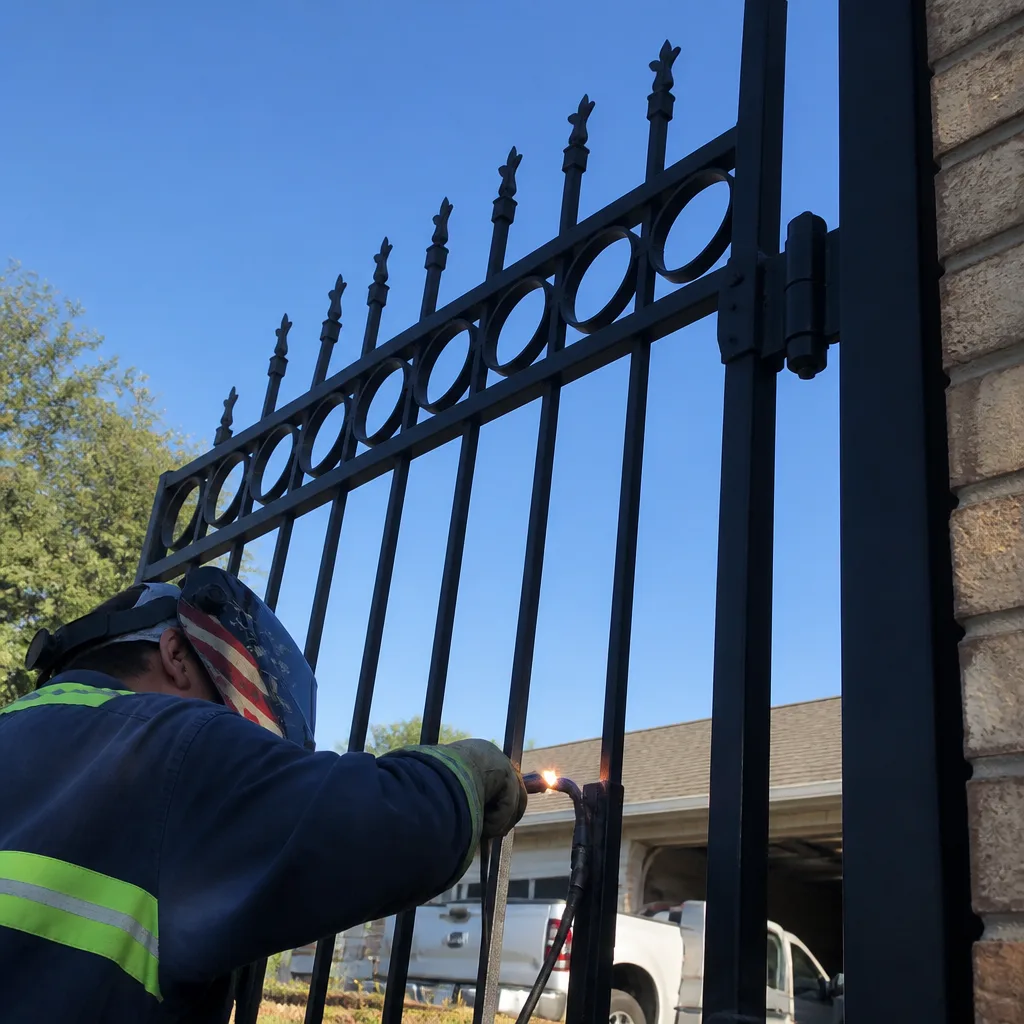
The DIY-versus-professional question in Pearland resolves into two separate questions. Can you physically perform the repair? Often yes. Can you correctly diagnose what needs to be repaired? That’s where the odds shift, especially when the symptom is intermittent, follows a rain event, or involves the safety system. The most expensive DIY gate repairs aren’t the ones that fail physically. They’re the ones where a $500 part was installed and the original fault remained. If the repair is mechanical adjustment, sensor cleaning, or battery work, DIY is reasonable. If the repair requires diagnostic equipment, touches entrapment protection, or involves stored-energy components, call a professional. Vance Gate Repair Pearland provides free estimates with pricing in writing before work begins throughout Pearland. Call (346) 253-3225 and tell us what your gate is doing. We’ll tell you honestly whether it’s a DIY job or a service call.
Written by Adrian Vance, Owner at Vance Gate Repair Pearland home, serving Pearland since 2014.